
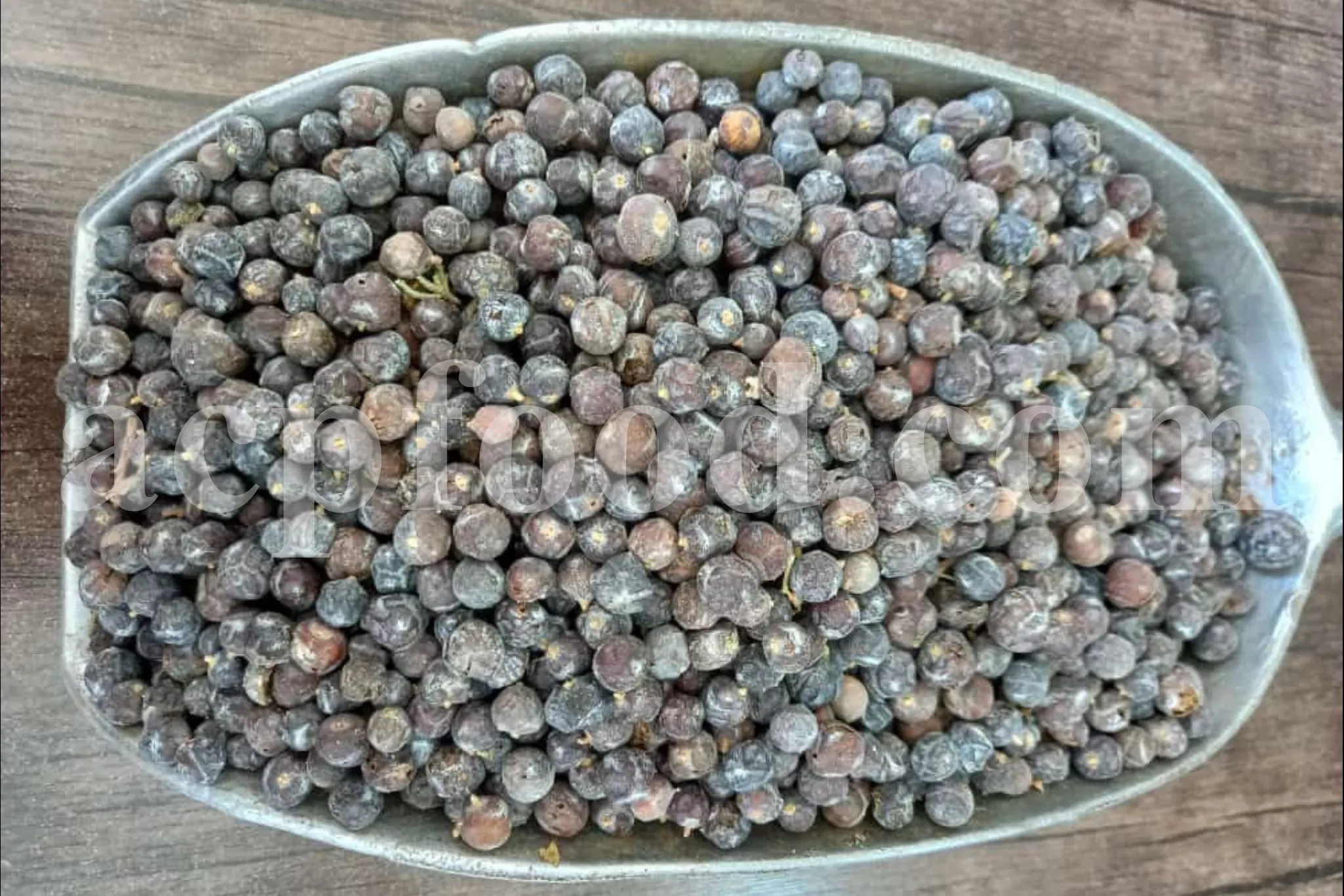
Bulk Dried Juniper Berries for Export
ACPFOOD supplies bulk dried juniper berries for export with reliable quality and consistent sizing suitable for large-scale buyers. Our dried juniper berries, sourced from Juniperus communis, meet the needs of aromatic ingredient manufacturers, spice wholesalers, and natural extract producers. As a trusted partner for bulk dried juniper berries, we ensure stable supply, fast dispatch, and competitive B2B pricing. Work confidently with a juniper berries wholesale distributor and Juniperus communis supplier dedicated to supporting your long-term sourcing requirements.
Scientific Name: Juniperus communis L.
Synonyms: Juniperus communis f. alopecuroides Laest.
English Name: Juniper Berries
Other Names in English (UK, USA, Canada, South Africa, Australia, New Zealand): juniper
Family: Cupressaceae
GENERAL DATA
Plant Parts: Fruit and leaves
Cultivation Mode: Wild collection/Cultivated
In Manufacturing: Pharmaceutical, food, perfumery, incense, oil, hydrosol, herbal tea, cosmetics, alcoholic and non-alcoholic drinks, extract, tincture, spices, soaps, shampoos, skincare, aromatherapy.
🌿 Industries That Use Juniper Berries (Juniperus communis L.)
Juniperus communis, the common juniper, is the only juniper species approved for human consumption, especially its mature, blue-black berries. These berries are used in culinary, beverage, cosmetic, medicinal, and aromatic industries worldwide.
1. Food & Culinary Industry
Juniper berries have a piney, citrusy, peppery flavor and are a classic ingredient in European and Scandinavian cuisines.
Applications:
-
Flavoring wild game meats (venison, duck, boar)
-
Spice blends, marinades, and pickling
-
Used in pâtés, stews, and traditional German sauerkraut
✅ Used whole, crushed, or ground
✅ Approved as a spice by FDA and EFSA
2. Beverage Industry
Juniper berries are the primary flavoring in gin and used in other alcoholic and non-alcoholic drinks.
Applications:
-
Gin production (core botanical)
-
Flavored liqueurs and tonics
-
Herbal teas (diuretic, detox teas)
-
Juniper berry syrups and infusions
✅ Key ingredient in classic gin profiles
✅ Herbal teas marketed for digestive wellness
3. Pharmaceutical & Herbal Medicine
Juniper berries are traditionally used for their diuretic, carminative, and antimicrobial properties.
Applications:
-
Herbal remedies for urinary tract infections
-
Stomach discomfort and bloating
-
Detoxification and liver support formulas
-
Anti-inflammatory and antiseptic salves
✅ Used in capsules, tinctures, teas, salves
⚠️ Avoid during pregnancy or kidney disorders
4. Cosmetics & Skincare Industry
Extracts and essential oils from the berries are used in skin and hair formulations.
Applications:
-
Acne treatment creams
-
Scalp treatments for dandruff
-
Detoxifying clay masks and bath soaks
-
Natural deodorants and soaps
✅ Juniper essential oil known for its cleansing and toning effects
5. Essential Oil & Aromatherapy
Juniper berry essential oil is used in aromatherapy, massage therapy, and perfumery.
Applications:
-
Relaxing, grounding aroma in oil diffusers
-
Detoxifying massage oils (often mixed with Cypress or Grapefruit)
-
Fresh, woody notes in perfumes and colognes
✅ Used for calming nervous tension, mental clarity
✅ Considered cleansing for lymphatic system in holistic wellness
6. Veterinary & Natural Pet Products
Used in natural flea and tick sprays, especially in combination with cedarwood and citronella.
Applications:
-
Pet shampoos with juniper essential oil
-
Eco-friendly pest repellents for dogs and horses
✅ Pet-safe when diluted properly
📊 Summary Table
| Industry | Common Uses |
|---|---|
| Culinary & Food | Spice for meats, pickles, sauces, and ferments |
| Beverage | Core botanical in gin, teas, liqueurs, syrups |
| Herbal Medicine | Diuretic, anti-inflammatory, carminative remedies |
| Cosmetics & Skincare | Toners, acne treatments, anti-dandruff solutions |
| Aromatherapy & Perfumery | Essential oil for mental clarity, massage oils, perfumes |
| Veterinary | Pet shampoos and flea repellents |
✅ Key Features
-
🍇 Only edible juniper species widely approved for food use
-
🌿 Aromatic profile: piney, woody, slightly sweet
-
💧 Essential oil has detoxifying and anti-inflammatory properties
-
🧪 Rich in terpenes, flavonoids, and antioxidants
PRODUCT NAME IN DIFFERENT LANGUAGES
Persian Name: ابهل/ Abhal
German Name (Deutschland, Austria, Switzerland): Gewürzwacholder entwickelt Beeren, Gemeiner Wacholder, Echt-Wacholder, Hecken-Wacholder, Ginster-Wacholder
French Name (France, Belgium, Switzerland, Quebec): Baies de genièvre, GENÉVRIER baie
HARVEST CALENDAR
Feb
Mar
Apr
May
Jun
Jul
Aug
Sep
Oct
Nov
Dec
To order Savina fruit, please contact us.
About Juniperus communis
Savin is a type of mountain cypress whose shrub height reaches two meters.
Its fruit is spherical, very small and almost the size of a pea. This fruit is slightly oily and has a sweet taste. Juniper berry is green at first. But after fully ripening, it becomes deep blue and slightly wrinkled after drying.
The best Juniper berry is big and aromatic.
The color of the leaves of this shrub is grayish green and they have a thick and aromatic scent.
Juniperus communis Chemical Constituents
α-Thujene, α-Pinene, Sabinene, p-Cymene, β-Pinene, Myrcene, Limonene, Cis-Sabinene hydrate, Carvone, Linalool, α-Thujone, Verbenone, Limomene oxide, trans-Sabinol, Pinocarvone, α-Terpineol, trans-Carveol, Geraneol, Citronellol, Linalyl acetate, Elemene, trans-Caryophyllene, α-Humulene, Cadinene, cis-Calamenene, α-Calacorene, Dodecanoic acid, Dodecanoic acid, Caryophyllene oxide, Humulene oxide, epi-Cubenol, Cadalene, Calamenene-10 β-ol, Calamenene-10 α-ol.
Juniperus communis Temperament
The leaves of the Juniper shrub are hot and dry in the third degree. Juniper berries are hot and dry in the second degree.
Savin Health Benefits
Savin leaves are an antidote to poisons, diuretics, and emmenagogue.
Juniper berries are diuretic and stomach tonic.
Eating 4 grams of juniper shrub leaves cures cough, chest and spleen pain, stomach weakness, hemorrhoids, colic, uterine pain, semen leakage, muscle rupture and insect bites.
Sitting in the decoction of Savin leaves cures oligomenorrhea.
The poultice of the leaves of this shrub shrinks swellings and is a tonic for the body, prevents sweating and relieves delirium.
Juniperus communis fruit is beneficial for treating uterine infections, gonorrhea, kidney stones, urinary retention, kidney inflammation, hemorrhoids, stomach diseases, borborygmi, diarrhea, meningitis, muscle stiffness, bradyacusia, alopecia areata, and arthritis.
Eating Juniper berries with honey improves lung and chest diseases, shortness of breath, asthma, chest pain, paralysis and dropsy.
Eating 5 grams of these berries kills stomach worms. Drinking fresh juice of this fruit helps to treat paralysis, paresis, weakness of nerves, MS, shortness of breath, flatulence, emmenagogue, and causes child abortion.
Keeping Juniper berries decoction in the mouth and gargling it is useful for curing mouth sores and pyorrhea. Sprinkling the powder of this fruit or its poultice with honey on the skin helps to treat skin spots and infected wounds and prevents scars from turning black.
It is proven that the poultice of Savin berries powder with vinegar can treat alopecia areata. Vaginal suppository of Juniper berries and honey cause child abortion.
Dripping Savina berries oil in the ear is very useful to cure deafness. Applying this oil topically on genital organs causes sexual incitement.
Savin Dosage
3 grams of Savin tree leaves.
2 to 4 grams of dry Juniper berries.
Juniper berries oil 3 to 5 drops.
Savin Side Effects
Juniperus communis leaves cause hoarseness.
Juniper berries are harmful to pregnant women, stomach, pharynx and hot liver. It also causes bloody urine.
Savin Modifiers
Gum Tragacanth for Savin leaves.
Armenian Bole or Barberry, to remove the damage of Juniper berries for the hot liver and prevent bloody urine and abortion caused.
Tallow or honey, to remove the harm of Juniper berries on the throat and stomach.
🧾 Nutrition Facts – Dried Juniper Berries (Juniperus communis L.) (Per 100 g)
Botanical Name: Juniperus communis L.
Common Names: Juniper, Common Juniper Berries
Part Used: Fully ripened dried berries (galbuli)
Traditional Use: Culinary spice, flavoring for gin and liqueurs, herbal digestive aid, and traditional remedy for urinary tract and respiratory conditions.
🔹 General Composition (Per 100 g, dried berries)
(approximate values)
| Component | Amount | Notes |
|---|---|---|
| Calories | ~240 kcal | Primarily from carbohydrates |
| Water (residual) | ~10.0 g | Low moisture content |
| Protein | ~4.0 g | Minor amount from seed content |
| Total Fat | ~14.0 g | Includes essential oils and seed oils |
| • Saturated Fat | ~2.0 g | From seed lipids |
| Carbohydrates | ~45.0 g | Includes sugars and fiber |
| • Sugars | ~12.0 g | Natural fruit sugars |
| • Dietary Fiber | ~30.0 g | Rich in insoluble fiber |
| Ash (minerals) | ~2.0 g | Mineral residue |
🔬 Mineral Content (approximate)
| Mineral | Amount |
|---|---|
| Potassium | ~520 mg |
| Calcium | ~120 mg |
| Magnesium | ~30 mg |
| Iron | ~5.0 mg |
| Manganese | ~1.2 mg |
| Zinc | ~0.3 mg |
🌿 Vitamin Content (approximate)
| Vitamin | Amount |
|---|---|
| Vitamin C | ~35 mg |
| Vitamin A | ~150 IU |
| Vitamin E | ~1.5 mg |
| Folate | ~25 µg |
🧪 Phytochemical & Aromatic Compounds
-
Monoterpenes (α-pinene, sabinene, myrcene) – key aroma and medicinal effects
-
Flavonoids – antioxidant compounds
-
Tannins – astringent phenolic compounds
-
Volatile essential oils – responsible for flavor and antimicrobial activity
🩺 Traditional (Non-Nutritional) Uses
| Application | Purpose |
|---|---|
| Culinary spice | Seasoning in game meats, sauerkraut, gin |
| Digestive aid | Stimulates appetite and digestion |
| Diuretic herbal remedy | Supports urinary tract health |
| Respiratory health | Traditionally used for coughs, colds |
⚠️ Usage & Safety Notes
-
Avoid excessive use during pregnancy – may stimulate uterine contractions
-
Prolonged high intake may irritate kidneys
-
Essential oil should not be consumed undiluted
-
Generally safe in culinary amounts
📦 Storage Guidelines
-
Store in airtight glass containers away from light and heat
-
Whole dried berries preserve flavor longer than ground form
-
Shelf life: 2–3 years under optimal storage
📌 Disclaimer
This nutritional profile is provided for botanical and educational reference. Juniper berries are used mainly as a spice and traditional herbal preparation, not as a staple food.
To order Juniper berries, please contact us.




Reviews
There are no reviews yet.