

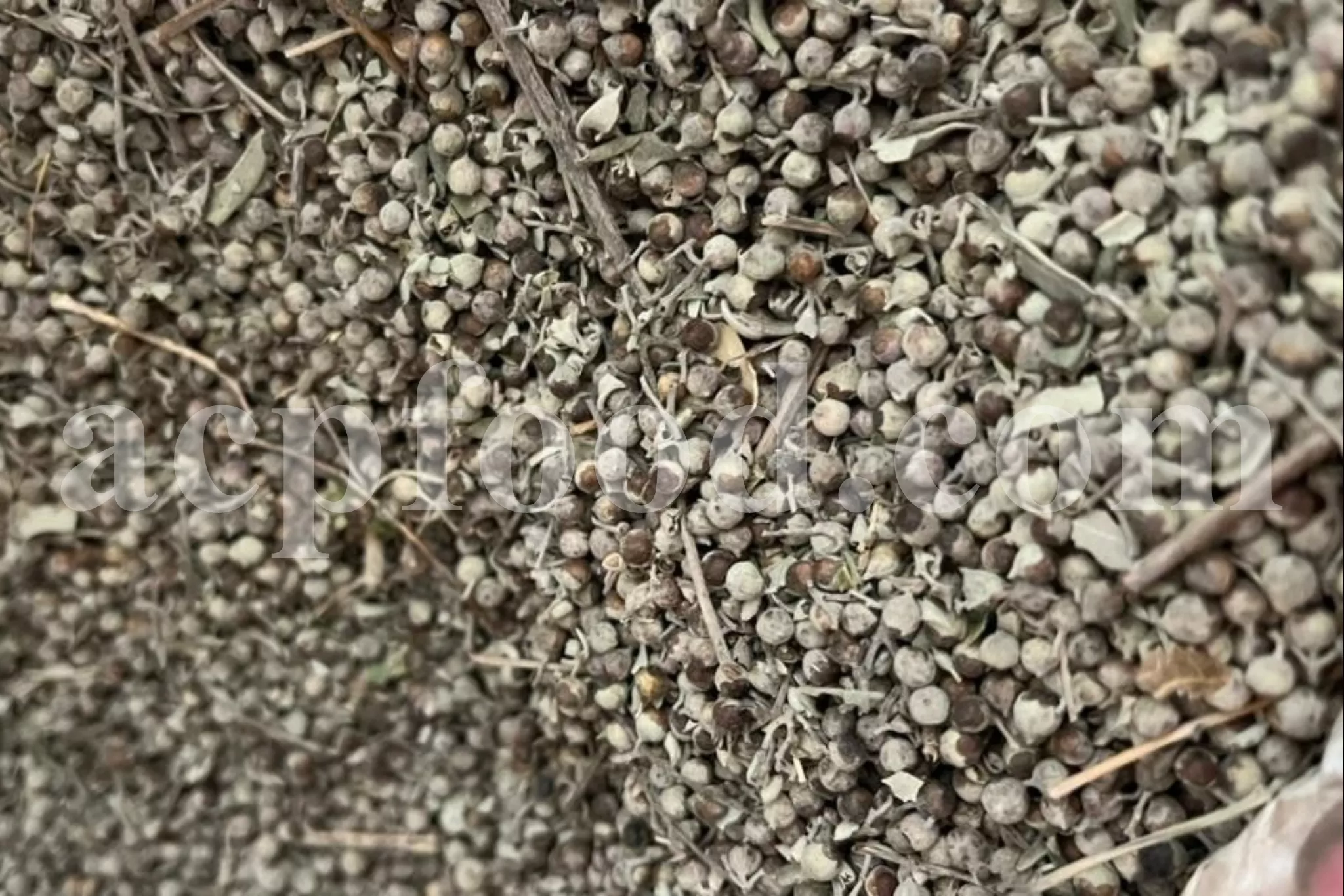

Bulk Chaste Berries for Export
ACPFOOD offers bulk chaste berries for export to wholesalers, importers, and distributors worldwide. Our premium Vitex Agnus Castus berries, also known as Vitex chasteberry, Monk’s pepper, or Agnus castus berries, are carefully selected and dried to preserve their natural aroma and quality. As a reliable vitex berry supplier, ACPFOOD provides consistent bulk quantities for herbal supplement, pharmaceutical, and cosmetic manufacturers. Partner with us for dependable supply, competitive pricing, and trusted sourcing of chaste berries wholesale.

GENERAL DATA
Plant Parts: Leaves, Fruits
Cultivation Mode: Wild collection/ Cultivated
In Manufacturing: Pharmaceutical, Extract, Herbal Tea, Alcoholic Drinks.
🌿 Industries That Use Chaste Berries (Vitex agnus-castus L.)
Chaste Berries, the fruits of Vitex agnus-castus L., are small, peppercorn-like berries traditionally used in women’s health and hormonal balancing. Native to the Mediterranean and Central Asia, the plant is now widely cultivated for its powerful phytohormonal properties, especially in the pharmaceutical and nutraceutical industries.
These berries contain flavonoids, diterpenoids (agnuside, aucubin), and essential oils known for influencing the pituitary gland and balancing reproductive hormones.
1. Pharmaceutical & Phytotherapy Industry
Vitex agnus-castus is a leading botanical used in natural hormonal therapy, especially for women.

2. Nutraceutical & Functional Supplement Industry
Chaste Berry is widely featured in women’s health supplements for hormonal balance and fertility support.
Uses:
-
Hormone-balancing teas and capsules
-
Fertility blends
-
Postpartum recovery formulas
-
Supplements for reducing PMS-related mood swings and breast tenderness
✅ Usually combined with black cohosh, evening primrose oil, or magnesium
3. Herbal & Traditional Medicine Industry
Used since ancient Greek and Roman times for reproductive regulation and libido control.
Traditional Uses:
-
Promotes chastity and reduces sexual desire (hence “monk’s pepper”)
-
Supports female reproductive health
-
Used for uterine toning and hormone harmonization
✅ Prepared as infusions, decoctions, or alcohol-based tinctures
4. Cosmetic & Personal Care Industry
Vitex is increasingly used in hormone-sensitive skin formulations.
Applications:
-
Acne-prone skin serums (especially hormonal acne)
-
Menopause skincare products
-
Herbal face oils or creams targeting cyclical breakouts
✅ Especially effective for adult female skincare needs
5. Veterinary & Animal Health Industry
Chaste Berry is being studied and used in equine and canine health for endocrine support and reproductive regulation.
Applications:
-
Hormone-related behavior management in horses
-
Herbal supplements for reproductive cycle balance in animals
✅ Administered in powder or liquid supplement form
6. Organic & Natural Product Industry
Popular in organic apothecaries and eco-conscious wellness brands.
Available as:
-
Organic dried berries (whole or ground)
-
Liquid extracts and herbal tinctures
-
Bulk raw material for supplement manufacturers
✅ Certified organic options preferred for clean-label branding
7. Academic & Clinical Research
Vitex continues to be studied for its dopaminergic activity and influence on the endocrine system.
Research Areas:
-
Prolactin reduction and dopamine receptor activity
-
PMS and PMDD clinical trials
-
Alternative therapy for infertility and PCOS
✅ Plays a significant role in evidence-based phytomedicine
✅ Summary of Key Applications
| Industry | Common Uses |
|---|---|
| Pharmaceutical & Phytotherapy | PMS, menopause, menstrual cycle regulation |
| Nutraceutical & Functional | Women’s hormone support, fertility, mood relief |
| Herbal & Traditional Medicine | Reproductive tonic, libido control, uterine support |
| Cosmetic & Skincare | Acne relief, hormonal skin care |
| Veterinary | Equine/canine hormone balancing |
| Organic & Natural Products | Herbal extracts, dried berries, organic wellness kits |
| Academic & Clinical Research | Endocrine modulation, dopaminergic studies |
🌟 Key Features:
-
Primary herb for women’s hormonal balance
-
Rich in diterpenoids and flavonoids like agnuside
-
Non-estrogenic yet effective for PMS and menopause
-
Used in both clinical medicine and traditional healing
-
Available in multiple formats: powder, capsules, tinctures, or tea
PRODUCT NAME IN DIFFERENT LANGUAGES
Persian Name: پنج انگشت/ Panj Angosht
German Name (Deutschland, Austria, Switzerland): Mönchspfeffer, Keuschlammsamen
French Name (France, Belgium, Switzerland, Quebec): Gattilier
HARVEST CALENDAR
Feb
Mar
Apr
May
Jun
Jul
Aug
Sep
Oct
Nov
Dec
To order Chaste berry tea, please contact us.
About Vitex Agnus-Castus
Chaste tree is a shrub whose height reaches two meters.

Chaste Berry Temperament
Second degree of hot and dry.
Chaste Berry Chemical Constituents
Homoorientin.
Chaste Berry Health Benefits
Chaste Berries eliminates the brain and liver blockages.
The leaves and fruits of Chaste tree help in the treatment of moist headaches, mania, palpitation, melancholy, bleeding, spleen congestion, uterine swelling, amenorrhea, nerve twist, anal fissure and snake, rabid dog and vermin bites. Inhaling the leaves of Chaste tree or Chaste Berries with the same amount of Oregano (Origanum vulgare) is useful for treating amenorrhea.

In India, Chaste Berries are used to treat eye diseases and stomach pain.
Chaste Berry Dose
4.5 gram.
Chaste Berry Side Effects
It is harmful for kidneys. It causes headache.
Chaste Berry Modifiers
🧾 Nutrition Facts – Dried Chaste Berries (Vitex agnus-castus L.) (Per 100g)
Botanical Name: Vitex agnus-castus L.
Common Names: Chaste Tree Berries, Monk’s Pepper, Vitex
Part Used: Dried fruit (berries)
Culinary and Traditional Use: Traditionally used in herbal medicine for women’s health; occasionally used as a culinary spice substitute for peppercorns
🔹 General Composition (Per 100g, dried)
| Nutrient | Amount | % Daily Value (DV) |
|---|---|---|
| Calories | ~260 kcal | 13% |
| Water (residual) | ~8 g | — |
| Protein | ~5.2 g | 10% |
| Total Fat | ~6.5 g | 9% |
| • Saturated Fat | ~1.1 g | 6% |
| Carbohydrates | ~44 g | 16% |
| • Dietary Fiber | ~13.8 g | 49% |
| • Natural Sugars | ~4.2 g | — |
✅ A fiber-dense botanical with moderate fat and protein content
🔬 Mineral Content
| Mineral | Amount | %DV |
|---|---|---|
| Potassium | 612 mg | 13% |
| Calcium | 168 mg | 13% |
| Magnesium | 84 mg | 20% |
| Iron | 6.1 mg | 34% |
| Zinc | 2.2 mg | 20% |
| Manganese | 1.4 mg | 61% |
| Copper | 0.32 mg | 35% |
| Phosphorus | 112 mg | 9% |
| Selenium | 2.1 mcg | 4% |
💎 Particularly rich in manganese, iron, magnesium, and copper—essential for metabolic and hormonal function
🌿 Vitamin Content
| Vitamin | Amount | %DV |
|---|---|---|
| Vitamin C | 5.6 mg | 6% |
| Vitamin E (α-tocopherol) | 1.8 mg | 12% |
| Niacin (Vitamin B3) | 1.9 mg | 12% |
| Riboflavin (B2) | 0.14 mg | 11% |
| Thiamine (B1) | 0.07 mg | 6% |
| Folate (B9) | 15 mcg | 4% |
| Vitamin A (RAE) | 25 mcg | 3% |
🌱 Offers a spectrum of antioxidant vitamins and B-complex nutrients
🧪 Phytochemical & Bioactive Compounds
-
Agnuside – A unique iridoid glycoside believed to modulate pituitary hormones
-
Casticin – A flavonoid with anti-inflammatory and dopaminergic activity
-
Essential Oils – Including 1,8-cineole, sabinene, and limonene
-
Flavonoids – Such as luteolin and apigenin
-
Alkaloids & Diterpenes – Bioactive compounds linked to hormonal modulation
🩺 Health Benefits
| System | Potential Effects |
|---|---|
| Endocrine | Supports hormonal balance, especially in women |
| Reproductive | May relieve PMS and menopausal discomforts |
| Nervous System | Mild calming effect via dopaminergic pathways |
| Digestive | Bitter principles may aid liver/gallbladder function |
| Immune System | Flavonoids support general cellular defense |
⚖️ Traditionally used for hormonal regulation; often included in herbal protocols for women’s reproductive health
⚠️ Usage & Safety Notes
-
Typical Serving (Herbal Use): 500–1000 mg/day powdered berry (capsule or infusion)
-
Contraindications: Not recommended during pregnancy
-
Interactions: May affect hormonal medications, dopamine-related drugs, or oral contraceptives
-
Medical Supervision: Advisable for prolonged use or specific conditions
📦 Storage Guidelines
-
Store in airtight containers away from light and humidity
-
Optimal temperature: cool and dry (below 25°C)
-
Shelf life: up to 2 years when properly stored
📌 Disclaimer
This information is provided for educational and botanical cataloguing purposes. Nutrient values and phytochemical profiles may vary based on source region, harvest timing, and drying technique.
To order Monk’s Pepper, please contact us.



Reviews
There are no reviews yet.