


Wholesale Bulk Sagapenum for Export
Our bulk sagapenum for export is sourced from high-quality Ferula persica gum resin, making it ideal for wholesalers, importers, and distributors in the pharmaceutical, food, and cosmetics industries. At ACPFOOD, we specialize in wholesale sagapenum supply, ensuring consistent quality and reliable global delivery for businesses that require pure and natural gum resin in large quantities.
ACPFOOD supplies Bulk Sagapenum for Export, a valuable aromatic gum-resin obtained from Ferula persica Willd., a species native to the mountainous and semi-arid regions of Iran. Known for its pungent aroma and medicinal richness, Bulk Sagapenum for Export is widely used in pharmaceutical formulations, incense production, veterinary applications, and traditional herbal medicine.
Our Bulk Sagapenum for Export is collected by tapping wild Ferula persica plants during the peak resin-secretion season. The gum is naturally air-dried, carefully cleaned, and graded to ensure high purity. Sagapenum contains sulfur-rich volatile oils, sesquiterpenes, and resins that contribute to its antispasmodic, antimicrobial, expectorant, and analgesic properties.
ACPFOOD guarantees consistent quality, CoA and TDS documentation, and export-grade packaging suitable for global shipping. As a trusted raw-material supplier, we provide Bulk Sagapenum for Export to pharmaceutical manufacturers, incense producers, natural remedy brands, and industrial processors worldwide.
🏭 Industrial Applications
-
Pharmaceutical Industry
Used in antispasmodic formulations, respiratory remedies, and herbal analgesic preparations. -
Incense & Aroma Industry
Sagapenum resin is valued for its deep, pungent fragrance and long-lasting aromatic smoke. -
Veterinary Medicine
Applied in traditional remedies for digestive and respiratory conditions. -
Herbal & Ethnomedicine
Used in natural tinctures, ointments, and detox blends. -
Industrial Use
Incorporated into natural adhesives, resin blends, and botanical-based compounds.
🌱 Product Specifications
| Parameter | Description |
|---|---|
| Botanical Name | Ferula persica Willd. |
| Common Name | Sagapenum / Persian Ferula Resin |
| Plant Part Used | Gum-resin exudate |
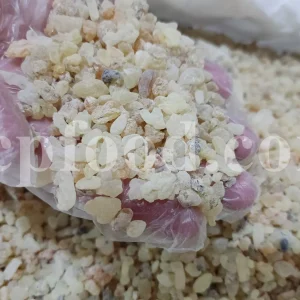
| Appearance | Yellowish-brown aromatic dried resin tears |
| Processing Method | Wild-harvested, air-dried, hand-cleaned |
| Purity | ≥ 95–98 % |
| Moisture | ≤ 10 % |
| Origin | Iran |
| Shelf Life | 24 months |
🌍 Why Choose ACPFOOD for Bulk Sagapenum for Export
-
✔️ Specialized supplier of Bulk Sagapenum for Export with consistent international quality
-
✔️ Lab-tested for purity and phytochemical profile
-
✔️ Wild-collected resin, non-irradiated, naturally processed
-
✔️ Export-ready documentation (CoA, TDS, MSDS)
-
✔️ Hygienic multi-layer packaging for long-distance shipping
-
✔️ Trusted by pharmaceutical, incense, and herbal manufacturing industries worldwide
ACPFOOD is a reliable global supplier for companies seeking ethically sourced, premium-grade Bulk Sagapenum for Export.
🚚 Delivery Options
🌍 Direct Export from Iran – Available worldwide
🇪🇺 European Union Customers: Delivered DDP from our warehouse in Heppenheim, Germany (MOQ: 500 Kg)
🇨🇦 Canada & 🇨🇳 China: Delivered DDP (MOQ: 500 Kg)
🇺🇸 USA Customers: Delivered DAP (MOQ: 500 Kg)
🚢 Other Countries: CIF shipping available worldwide

GENERAL DATA
Plant parts: Gum/Resin
Cultivation mode: Wild collection
In manufacturing: Producing valuable perfumes or as pharmaceutical agents.
In food: Producing common spices.
🌿 Industries That Use Sagapenum Gum (Ferula persica)
Sagapenum is a pungent, aromatic gum-resin obtained from the Ferula persica plant, a species native to Iran and parts of Central Asia. Closely related to Asafoetida and Galbanum, this oleo-gum-resin has been used since antiquity in medicine, incense, and perfumery.
🌱 What Is Sagapenum?
Sagapenum gum is the dried exudate obtained by tapping the roots or lower stems of this plant. It contains a blend of resins, volatile oils, and gums, including ferulic acid derivatives, sesquiterpenes, and sulfur-containing compounds, which give it its characteristic strong odor.
Traditionally used in Greco-Roman, Persian, and Ayurvedic medicine, Sagapenum is now a niche botanical of interest in natural pharmaceuticals, aromatherapy, and ethnobotanical research.
1. Pharmaceutical & Traditional Medicine Industry
Sagapenum gum has been used for centuries as an antispasmodic, digestive stimulant, and expectorant in traditional systems. It has properties similar to Asafoetida but is generally less known commercially.
Applications:
-
Digestive tonics and carminative pastes
-
Anti-convulsant and anti-spasmodic herbal formulations
-
Expectorant in cough and respiratory syrups
-
Used externally for inflammatory swellings and bruises
✅ Used in traditional Persian, Ayurvedic, and Unani pharmacopoeias
✅ Shows promise in neuroprotective and anti-inflammatory herbal formulations
2. Aromatherapy & Natural Perfumery
Due to its unique sulfurous and earthy aroma, Sagapenum gum is occasionally used in niche perfumery, especially for oriental and incense-inspired fragrances. Its resinous scent also makes it valuable in natural incense formulations.
Applications:
-
Fixative and base note in perfumes and colognes
-
Aromatic gum for incense sticks and traditional bakhoor
-
Essential oil for grounding and purification blends
✅ Alternative to Galbanum and Asafoetida in resin-based fragrance systems
✅ Natural fixative with complex depth and tenacity
3. Nutraceutical & Botanical Supplement Industry
Though less common than Asafoetida, Sagapenum is explored in botanical extracts for its potential health benefits, particularly as an anti-inflammatory and antispasmodic agent.
Applications:
-
Extracts in capsules or tinctures for digestion and muscle tension
-
Resin powders for herbal teas and gut detox blends
-
Formulas targeting asthma, hysteria, and gastric discomfort
✅ Contains biologically active compounds like umbelliferone, ferulic esters
✅ Traditionally believed to enhance blood flow and reduce cramping
4. Veterinary & Ethnoveterinary Use
In some rural regions, Sagapenum is used in ethnoveterinary practices to treat colic in livestock or as a poultice for infections and swelling in animals.
Applications:
-
Carminative boluses for ruminants
-
External resin application for inflammation or bruising
✅ Known in traditional Iranian rural herbalism for animal care
✅ Natural alternative to synthetic antibiotics or analgesics

✅ Mentioned in historical texts by Pliny and Dioscorides
✅ Sometimes combined with Myrrh, Frankincense, or Bdellium
6. Academic, Pharmacognostic & Botanical Research
Modern interest in Sagapenum centers on its phytochemical composition, especially its potential neuroprotective, antimicrobial, and anti-inflammatory properties.
Research Topics:
-
Sesquiterpene profiles and sulfur compounds
-
Comparison with Ferula asafoetida and Ferula gummosa
-
Antioxidant and neurological effects
-
Potential in treating gastrointestinal disorders
✅ Studied for pharmaceutical innovation based on traditional use
✅ Considered in comparative Ferula genus analyses
✅ Summary of Key Applications
| Industry | Common Uses |
|---|---|
| Pharmaceutical & Traditional | Antispasmodic tonics, cough syrups, digestive remedies |
| Aromatherapy & Perfumery | Fixative in oriental perfumes, incense, grounding oil blends |
| Nutraceutical & Botanical | Digestive supplements, anti-inflammatory extracts |
| Veterinary & Ethnoveterinary | Carminative boluses, external poultices for animals |
| Ethnic & Spiritual | Ritual incense, purification blends, ancient cultural use |
| Academic & Research | Phytochemical studies, neurological and antimicrobial effects |
🌟 Key Features
-
Aromatic oleo-gum-resin with earthy, sulfurous scent
-
Contains ferulic acid esters, sesquiterpenes, and resins
-
Traditional uses: antispasmodic, digestive aid, expectorant
-
Cultural and ritual significance in ancient and Middle Eastern traditions
-
Potential in natural perfumery and pharmaceutical research
-
Niche but promising product in botanical medicine and aromatics
🧪 Comparison Table: Sagapenum vs. Asafoetida vs. Galbanum
(Ferula persica Willd. vs. Ferula assa-foetida L. vs. Ferula gummosa Boiss.)
| Feature / Property | Sagapenum Gum (Ferula persica) | Asafoetida Resin (Ferula assa-foetida) | Galbanum Resin (Ferula gummosa) |
|---|---|---|---|
| 🌿 Plant Species | Ferula persica Willd. | Ferula assa-foetida L. | Ferula gummosa Boiss. |
| 🌍 Native Range | Iran, Central Asia | Iran, Afghanistan, Turkmenistan | Iran, Caucasus, Turkey |
| 🧪 Resin Type | Oleo-gum-resin | Oleo-gum-resin | Oleo-gum-resin |
| 💨 Aroma Profile | Earthy, sulfurous, less pungent | Strong, sulfurous, garlic-like | Green, balsamic, piney, musky |
| 🌟 Major Constituents | Sesquiterpenes, ferulic acid esters | Resin acids, ferulic acid, sulfur compounds | α- and β-pinene, terpenes, resin acids |
| 🧴 Consistency & Appearance | Soft, brown-yellow gum, sticky | Brittle or semi-soft yellow-brown resin | Sticky green to brown, glossy when fresh |
| 🌿 Traditional Medicinal Uses | Antispasmodic, digestive, anti-inflammatory | Digestive aid, carminative, expectorant | Anti-inflammatory, wound healing, analgesic |
| 🧘 Spiritual / Ritual Use | Minor incense in historical rituals | Strongly avoided in some rituals (due to odor) | Widely used in sacred incense and rituals |
| 🧪 Modern Applications | Niche pharmaceuticals, natural perfumery | Spices, pharmaceuticals, nutraceuticals | Perfumery, aromatherapy, high-end incense |
| 🍽️ Culinary Use | Rare/none | Yes – as spice (hing), especially in Indian cuisine | Rare, sometimes in historic recipes |
| 🧴 Use in Perfumery | Fixative, niche oriental blends | Rare – usually too pungent | Valued fixative in perfumery, green notes |
| 🐄 Ethnoveterinary Uses | Yes – digestive and topical applications | Yes – traditional livestock treatments | Limited or unreported |
| 🔬 Research Focus | Anti-inflammatory, neuroprotective | Antibacterial, gastroprotective, anti-flatulent | Antioxidant, wound healing, anti-aging |
| 📜 Historical Mentions | Dioscorides, Avicenna, Persian herbals | Hippocrates, Ayurvedic texts, Iranian folklore | Pliny, Talmudic references, Egyptian incense |
| 🧭 Trade Significance (Modern) | Low – niche export | High – common spice and pharmaceutical | Medium – used in fragrance and research |
✅ Summary Snapshot:
| Resin | Key Aroma | Culinary Use | Perfume Use | Medicinal Use | Trade Popularity |
|---|---|---|---|---|---|
| Sagapenum | Earthy, sulfurous | ❌ Rare | ✅ Niche Oriental | ✅ Traditional | ⭐ Low (Niche) |
| Asafoetida | Pungent, garlic | ✅ Widely Used | ❌ Too strong | ✅ Widely used | ⭐⭐⭐ High |
| Galbanum | Piney, green | ❌ Rare/Historic | ✅ Premium Fixative | ✅ Herbal & Modern | ⭐⭐ Medium |
PRODUCT NAME IN DIFFERENT LANGUAGES
Persian Name: سکبینج، سک بینه/ Sakbinaj, Sakbineh
German Name (Deutschland, Austria, Switzerland): Sagapenum
French Name (France, Belgium, Switzerland, Quebec): Sagapenum
HARVEST CALENDAR
Feb
Mar
Apr
May
Jun
Jul
Aug
Sep
Oct
Nov
Dec

Sagapenum Chemical Constituents
Essential oil (Dill-apiole, elemicin, limonene, 6-camphenol acetate, Dimethyl trisulphide, dimethyl tetrasulphide, α-barbatene, lavandulyl 2-methyl butanoate, α-terpinyl isopentanoate, α-terpinyl n-pentanoate), Phenylpropanoids, Oxygenated monoterpenes, Monoterpene hydrocarbons, Sesquiterpene hydrocarbons, Oxygenated sesquiterpenes, Sulfur compounds.
To order Ferula persica gum, please contact us.
Sagapenum Temperament
Hot and dry.
To order Sagapenum gum, please contact us.

2. If every time 0.5 to 3 grams of it is mixed with honey and eaten, it is useful for strengthening sexual power, it has a good effect for relieving the side effects of laxatives, like Opium.
3. If you eat as much as 6 peas every night for four nights before sleeping, it will cure kidney inflammation.
4. If you eat as much as 3 peas of it every night before sleeping and continue for twelve nights, it will cure stomach ulcers.
5. Sagapenum gum poultice with vinegar is beneficial for removing thorns that have sunk into the body.
🧴 Nutrition Facts – Sagapenum Gum (Ferula persica Willd.)
Serving Size: 1 g (typical traditional dose in powdered or resin form)
Calories: ~3 kcal
| Nutrient | Amount per 1g | Per 100g |
|---|---|---|
| Total Fat | 0.01 g | 1.0 g |
| • Saturated Fat | 0.002 g | 0.2 g |
| Cholesterol | 0 mg | 0 mg |
| Sodium | 0.3 mg | 30 mg |
| Total Carbohydrate | 0.5 g | 50.0 g |
| • Dietary Fiber | 0.05 g | 5.0 g |
| • Natural Sugars | 0.02 g | 2.0 g |
| Protein | 0.05 g | 5.0 g |
🌿 Phytochemical & Functional Profile (Per 100g):
| Compound / Group | Approx. Content | Functional Role |
|---|---|---|
| Sesquiterpene coumarins | High | Antispasmodic, anti-inflammatory, antimicrobial |
| Sulfur compounds | Present | Mucolytic, expectorant, stimulant |
| Ferulic acid derivatives | Present | Antioxidant, vascular support |
| Volatile oils | 4–6% | Pungent aroma, antimicrobial action |
| Resins & gum polysaccharides | ~30–40% | Binding, demulcent, potential prebiotic |
🧬 Trace Minerals (Per 100g):
| Micronutrient | Approx. Content |
|---|---|
| Calcium | ~60 mg |
| Magnesium | ~35 mg |
| Iron | ~3.2 mg |
| Potassium | ~210 mg |
🧴 Sagapenum gum is a resin obtained from the taproot of Ferula persica, historically used in Persian and Unani medicine as a digestive, anti-flatulent, antispasmodic, and nervine agent. Its strong smell and warming nature classify it among stimulatory gums like asafoetida and galbanum.
✅ Used traditionally for coughs, uterine stimulation, digestive sluggishness, and topical inflammation. Also historically applied as incense or liniment.
⚠️ Not recommended in pregnancy or for individuals with sulfur sensitivity. Should be used in small doses under guidance.
Percent Daily Values are based on a 2,000-calorie diet. Nutrient content varies depending on resin age and harvesting conditions.
To order Sakbinaj, please contact us.



Reviews
There are no reviews yet.