


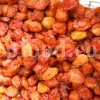
Bulk Dried Plums for Export – Wholesale Supply
At ACPFOOD, we are a trusted dried plum supplier and prune exporter, providing bulk dried plums for export to wholesalers, distributors, and food manufacturers worldwide. Our selection includes pitted prunes and aloo bukhara, carefully dried and processed to maintain their natural flavor, color, and nutritional value. As a reliable bulk dried fruit wholesaler and aloo bukhara distributor, we ensure consistent quality, competitive pricing, and timely delivery, making ACPFOOD a preferred partner for international buyers seeking premium dried plums for culinary, industrial, and retail purposes.
Scientific Names: Prunus domestica L.
Synonym: Prunus cerasiflora Paill.
English Name: Dried Plums
Other Names in English (UK, USA, Canada, South Africa, Australia, New Zealand): European Plum (Damson- Prune- Victoria- Greengage- Mirabelle), Wild Plum, Bullace Plum, Aloo Bukhara
Family: Rosaceae
GENERAL DATA
Plant Parts: Leaves, Fruits, Tree Resin
Cultivation Mode: Wild collection/ Cultivated
In Manufacturing: Pharmaceutical, Herbal Tea, Food, Dried Fruit, Ice Cream, Extract, Beverages, Chewing gum, Confectionary, Chocolate, Paste.
In Food: Stews, Pottages, Cake, Sweets, Meatballs, etc.

1. Food & Beverage Industry
Dried plums are a versatile ingredient in culinary applications and health-focused food formulations.
Applications:
-
Snack bars, trail mixes, and natural fruit leathers
-
Fruit compotes, sauces, and chutneys
-
Baked goods (e.g., muffins, cakes, cookies)
-
Breakfast cereals and granolas
-
Natural sweeteners or thickeners in food processing
✅ Common forms: whole dried prunes, chopped, paste, puree, or juice concentrate
2. Nutraceutical & Functional Food Industry
Valued for their fiber content, sorbitol, and antioxidant properties, prunes are widely used in functional digestive health products.
Key Benefits:
-
Natural laxative and digestive aid
-
Promotes gut microbiome and colon health
-
Helps manage constipation in elderly populations
-
May support bone health (studied in postmenopausal women)
✅ Common formats: capsules, extracts, functional beverages, fiber supplements
3. Pharmaceutical Industry
Dried plums are used as natural supportive agents in digestive and bone health formulations.
Uses include:
-
Natural laxatives or bowel regularity treatments
-
Nutritional support in bone density enhancement
-
Vitamin-fortified prune concentrates for elderly patients
✅ Frequently used in pediatric and geriatric formulations
4. Cosmetic & Skincare Industry
Thanks to their antioxidants and phenolic compounds, dried plums support skin protection and anti-aging formulations.
Applications:
-
Anti-wrinkle and firming creams
-
Radiance-boosting masks and cleansers
-
Skin tonics with polyphenol extracts
✅ Known to neutralize free radicals and support skin regeneration
5. Traditional & Herbal Medicine Industry
Prunes have been used in various cultures as a natural remedy for gut disorders, fatigue, and liver sluggishness.
Traditional uses:
-
As a gentle intestinal cleanser
-
Restorative tonic in convalescent diets
-
Support for detox and hydration in dry climates
✅ Used in decoctions or rehydrated and consumed with warm water
6. Baby Food & Geriatric Nutrition Industry
Dried plums are safe, sweet, and functional, making them ideal for age-specific nutritional markets.
Use cases:
-
Pureed baby food for bowel regularity
-
Elderly diet plans to ease digestion and prevent nutrient loss
-
Dental-safe, soft chew products
✅ Often combined with apple, pear, or banana purées
7. Ethnic, Organic & Gourmet Markets
Prunes are a staple in Middle Eastern, Mediterranean, and Eastern European cuisine and are increasingly marketed through organic and specialty health channels.
Applications:
-
Tagines, pilafs, or Persian stews
-
Organic-certified dried fruits
-
Premium tea blends or infused syrups
✅ Popular in bulk and value-added health packs
8. Research & Agricultural Industry
Prunus domestica is studied for its fiber composition, post-harvest quality, and anti-inflammatory properties.
Focus areas:
-
Sorbitol and phenolic compounds’ impact on metabolism
-
Prune-enriched diet and bone loss prevention
-
Storage and dehydration technologies
✅ Important in postharvest technology and nutraceutical development
✅ Summary of Key Applications
| Industry | Common Uses |
|---|---|
| Food & Beverage | Snacks, baked goods, sauces, natural sweeteners |
| Nutraceutical & Functional | Digestive supplements, bone support formulas |
| Pharmaceutical | Natural laxative, pediatric/geriatric nutrition |
| Cosmetic & Skincare | Anti-aging, antioxidant-rich skincare |
| Traditional & Herbal Medicine | Gut health, fatigue, detox tonic |
| Baby/Geriatric Nutrition | Purees, soft chews, gut-friendly baby food |
| Organic & Gourmet Markets | Ethnic foods, specialty organic dried fruit |
| Research & Agriculture | Dietary fiber research, storage tech, health applications |
🌟 Key Features:
-
Naturally high in fiber, sorbitol, and polyphenols
-
A safe, functional laxative for all ages
-
Supports gut, bone, and metabolic health
-
Non-GMO, vegan, shelf-stable, and cost-effective
-
Widely used in health food innovation and research
PRODUCT NAME IN DIFFERENT LANGUAGES
Persian Name: آلو- گوجه برغانی- آلو بخارا/ Aloo- Goje Baraghani- Aloo Bukhara
German Name (Deutschland, Austria, Switzerland): Pflaumen, Getrocknete Pflaumen
French Name (France, Belgium, Switzerland, Quebec): Prunier
HARVEST CALENDAR
Feb
Mar
Apr
May
Jun
Jul
Aug
Sep
Oct
Nov
Dec
To order dried Pitted Prunes, please contact us.
About Prunus Domestica
Plum is the fruit of a tree whose height reaches five meters. The plum tree is very similar to the Peach and Apricot tree. There are many types of plums, but four types are more famous. Prune, Mirabelle, Damson and Wild Plum.

Plum Temperament
Second degree of cold and moist.
Plum Chemical Constituents
Malic acid, citric acid, succinic acid, salicylic acid, sacarose, amygdalin.
Plum Health Benefits
Plum is laxative. Dried plums are appetizing. Plum tree leaves expel stomach worms and laxatives. The resin of its tree is a phlegm breaker.
Dried Plum improves hot headache, choleric fevers, thirst and body itching and relieves inflammation and heart heat. Sweet dried plum is more effective than other plums in expelling yellow bile and is useful for hot stomachs. Eating it before meals is good for digestion. But cold temperament people should have their stomach corrected first.
Its leaves cure choleric fevers, sanguine fevers, dizziness, headache, and nausea. A decoction of its leaves is useful for tonsils, small tongue, and pharyngitis problems, strengthens the gums and eliminates colds. Poultice of plum leaves under the navel is very useful to get rid of intestinal worms.
Dried Plums Dose
Eating seven dried Plums is laxative and eating fifteen can cause diarrhea.
Dried Plums Side Effects
Brain, cold stomach and cold-tempered people.
Plum Modifiers
Jujube (Ziziphus jujuba) for brain. Goleghand and Sekanjebin for stomach. Honey, Frankincense and Terebinth gum for cold temperaments.
🧾 Nutrition Facts – Dried Plums (Prunus domestica L.) (Per 100g)
Botanical Name: Prunus domestica L.
Common Names: Dried Plums, Prunes
Part Used: Whole fruit (dried, pitted)
Culinary and Traditional Use: Widely consumed as a natural sweet snack and digestive aid; used in traditional preparations for laxative and antioxidant effects
🔹 General Composition (Per 100g, dried)
| Nutrient | Amount | % Daily Value (DV) |
|---|---|---|
| Calories | ~240 kcal | 12% |
| Water (residual) | ~30 g | — |
| Protein | ~2.2 g | 4% |
| Total Fat | ~0.4 g | <1% |
| • Saturated Fat | ~0.1 g | <1% |
| Carbohydrates | ~64 g | 23% |
| • Dietary Fiber | ~7.1 g | 25% |
| • Natural Sugars | ~38 g | — |
✅ Naturally sweet, rich in fiber, low in fat and protein
🔬 Mineral Content
| Mineral | Amount | %DV |
|---|---|---|
| Potassium | 732 mg | 16% |
| Iron | 0.9 mg | 5% |
| Magnesium | 41 mg | 10% |
| Phosphorus | 69 mg | 6% |
| Calcium | 43 mg | 3% |
| Zinc | 0.4 mg | 4% |
| Copper | 0.28 mg | 31% |
| Manganese | 0.3 mg | 13% |
| Selenium | 0.3 mcg | <1% |
💎 Particularly high in potassium and copper, supportive for circulation and metabolism
🌿 Vitamin Content
| Vitamin | Amount | %DV |
|---|---|---|
| Vitamin K1 | 59.5 mcg | 50% |
| Vitamin A (RAE) | 39 mcg | 4% |
| Vitamin C | 0.6 mg | 1% |
| Niacin (B3) | 1.9 mg | 12% |
| Riboflavin (B2) | 0.18 mg | 14% |
| Thiamine (B1) | 0.05 mg | 4% |
| Folate (B9) | 4 mcg | 1% |
| Vitamin E | 0.4 mg | 3% |
🌱 Excellent source of Vitamin K and B-vitamins; low in Vitamin C due to drying
🧪 Phytochemical & Bioactive Compounds
-
Chlorogenic Acids – Polyphenols with antioxidant and anti-inflammatory effects
-
Sorbitol – A natural sugar alcohol contributing to mild laxative effect
-
Neochlorogenic Acid – Supports cellular protection and lipid metabolism
-
Anthocyanins – Pigments with cardiovascular and neuroprotective potential
-
Triterpenes – May aid in anti-inflammatory and anti-obesity actions
🩺 Health Benefits
| System | Potential Effects |
|---|---|
| Digestive | Natural laxative due to fiber and sorbitol |
| Cardiovascular | Potassium and polyphenols support heart health |
| Antioxidant Defense | Rich in protective phenolics |
| Bone Health | Vitamin K and boron content support bone metabolism |
⚖️ Commonly used in traditional diets for digestive regularity and healthy aging
⚠️ Usage & Safety Notes
-
Typical Serving Size: 3–5 dried plums (30–50 g)
-
Contraindications: Excessive consumption may cause bloating or diarrhea due to sorbitol
-
Drug Interactions: May interact with anticoagulants (due to Vitamin K content)
📦 Storage Guidelines
-
Store in a tightly sealed container
-
Keep in a cool, dry place
-
Avoid exposure to moisture and direct sunlight
-
Shelf life: 6–9 months (room temp); up to 12 months (refrigerated)
📌 Disclaimer
This information is intended for educational and cataloguing use in a professional setting. Nutrient values may vary depending on drying methods, cultivar, and origin.


Reviews
There are no reviews yet.