


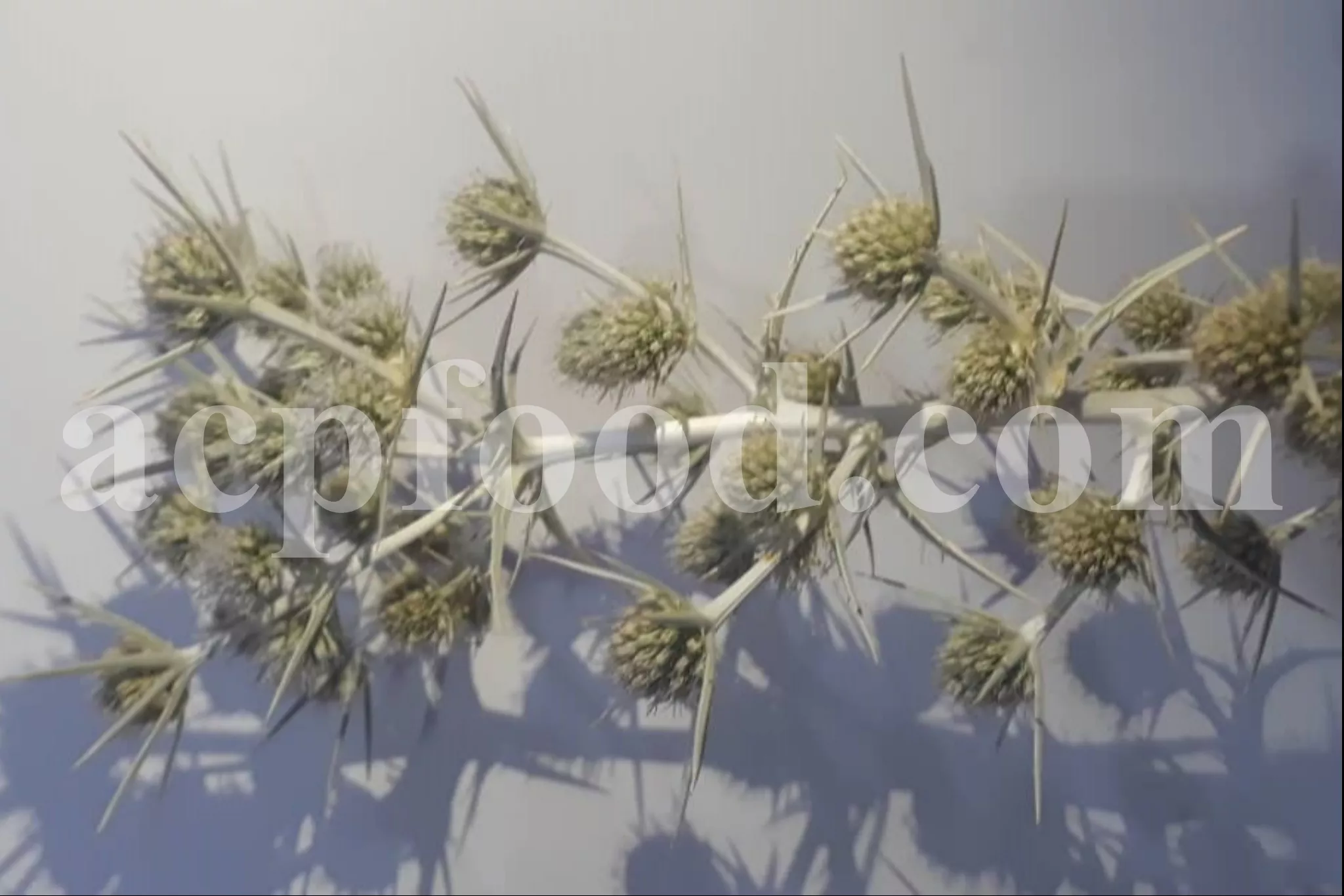

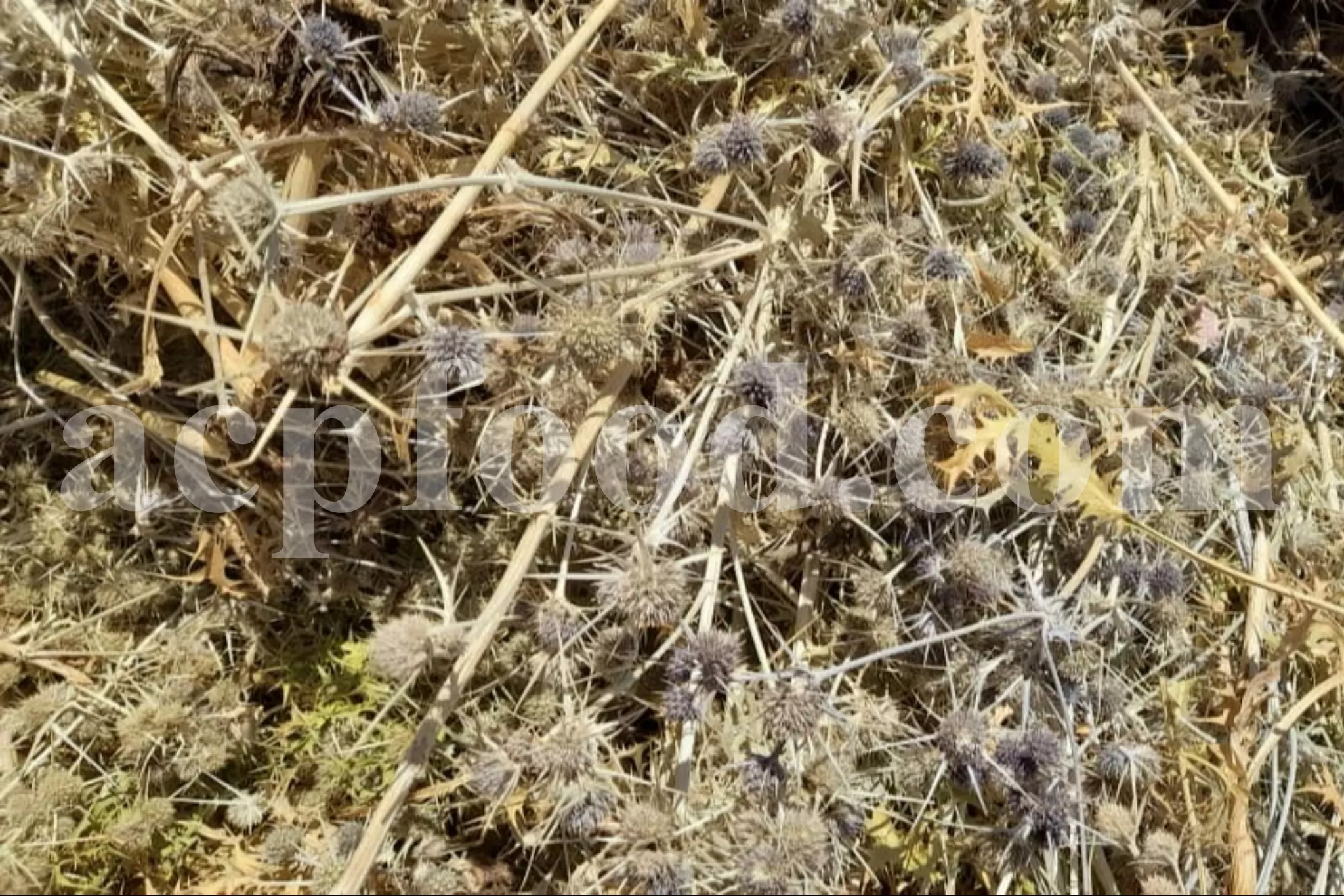




Reliable Source of Bulk Eryngo for Export

GENERAL DATA
Plant parts: Flower, leaves, root, and hydrosol.
Cultivation mode: Wild collection/Cultivated
In manufacturing: Pharmaceutical, Herbal Tea, Hydrosols, etc.
In food: –
🌿 Industries That Use Eryngo (Eryngium planum L.)
Eryngo, commonly referred to as Flat Sea Holly or Blue Eryngo, is a spiky, steel-blue flowering plant belonging to the Apiaceae family. Native to Europe, Central Asia, and Iran, it is widely used in traditional herbalism, homeopathy, ornamental horticulture, and niche cosmeceuticals.
1. Pharmaceutical & Traditional Medicine Industry
In both Western herbalism and Persian folk medicine, Eryngium planum has been valued for its:

✅ Used in: Decoctions, tinctures, herbal teas, homeopathic pellets
⚠️ Most common part used: roots and aerial parts (young leaves and stems)
2. Herbal & Nutraceutical Industry
Eryngo is included in detox blends and herbal wellness formulas, especially those focused on:
-
Kidney and urinary tract support
-
Respiratory aid and cleansing
-
Liver and gallbladder tonics
✅ Typically combined with Nettle root, Goldenrod, or Couch Grass
3. Cosmetic & Personal Care Industry
Eryngo extracts are gaining traction in natural cosmetics due to their antioxidant and skin-toning properties:
-
Anti-aging creams and serums: Stimulates collagen and tissue repair
-
Herbal skin cleansers: Helps reduce inflammation and tone skin
-
Hair revitalization: Used in folk treatments to stimulate scalp health
✅ Especially used in botanical spa treatments and organic product lines
4. Ornamental & Horticultural Industry
Highly valued for its striking appearance, Eryngo is:
-
Cultivated in cut flower arrangements and dried floral decor
-
Used in pollinator gardens (attracts bees and butterflies)
-
Planted in rock gardens and xeriscaping for drought tolerance
✅ Dried flowers maintain their steel-blue color for months
5. Export & Botanical Markets
Eryngo is traded as:
-
Dried root or herb for herbal teas
-
Dried flowers for ornamental and crafts use
-
Botanical extract in bulk for niche cosmetic or nutraceutical formulators
✅ Popular in European and Central Asian herbal markets
✅ Summary of Key Applications
| Industry | Common Uses |
|---|---|
| Pharmaceutical & Traditional | Diuretic, expectorant, mild aphrodisiac, tonic for urinary/bladder |
| Herbal & Nutraceutical | Kidney and liver detox blends, immune support |
| Cosmetic & Personal Care | Anti-aging creams, herbal face mists, scalp tonics |
| Ornamental Horticulture | Dried flowers, rock gardens, pollinator-friendly planting |
| Export & Botanical Markets | Dried herb/roots, extracts, craft-grade ornamental stems |
🌿 Key Features
-
🌱 Contains flavonoids, caffeic acid derivatives, saponins, and essential oils
-
🌍 Native to Iran, Central Asia, and Eastern Europe
-
🌸 Noted for its blue thistle-like flowers and resinous roots
-
🧪 Known for its antioxidant, anti-inflammatory, and mucolytic properties
-
✅ Available as dried herb, tincture, root powder, or essential oil extract
🌿 Industries That Use Sea-holly (Eryngium maritimum L.)
Sea-holly is a perennial herb from the Apiaceae family, native to coastal regions of Europe, the Mediterranean, and western Asia. Known for its spiny silver-blue leaves and unique flower heads, Eryngium maritimum is prized for its medicinal, ornamental, and cosmetic value, as well as its ecological importance.
1. Pharmaceutical & Traditional Medicine Industry
Used historically in European folk medicine, especially in coastal communities, Sea-holly has been appreciated for:

✅ Common Forms: Dried root decoctions, powdered capsules, tinctures
2. Herbal & Nutraceutical Industry
Though lesser known than its inland cousin (Eryngium planum), E. maritimum appears in:
-
Kidney and liver cleansing teas
-
Respiratory and immune support blends
-
Adaptogenic and aphrodisiac formulations in small-scale herbal lines
✅ Known for its essential oils, tannins, and saponins
3. Cosmetic & Skincare Industry
Due to its anti-inflammatory and astringent nature, Sea-holly is used in:
-
Facial tonics and serums for irritated or inflamed skin
-
After-sun creams to soothe sun-exposed skin
-
Anti-aging botanical extracts (antioxidant effect)
✅ Rich in phenolic acids and marine-adapted bioactives
4. Ornamental & Floriculture Industry
With its silvery blue foliage and thistle-like blooms, Sea-holly is:
-
Popular in dried and fresh floral arrangements
-
Grown in coastal ornamental gardens and eco-landscaping
-
Used in native plant restoration projects for sand dune stabilization
✅ Attractive to bees, butterflies, and pollinators
5. Ecological & Conservation Use
Due to its native coastal habitat, Sea-holly plays an important role in:
-
Ecosystem restoration and coastal dune stabilization
-
Biodiversity conservation in maritime climates
-
Pollinator support in threatened sandy environments
✅ Considered a protected species in some countries
✅ Summary of Key Applications
| Industry | Common Uses |
|---|---|
| Pharmaceutical & Traditional | Diuretic, respiratory aid, digestive support, vitality tonic |
| Herbal & Nutraceutical | Liver/kidney support teas, adaptogenic herbals |
| Cosmetic & Personal Care | Soothing creams, facial toners, antioxidant skincare |
| Ornamental Horticulture | Dried flowers, native gardens, pollinator-friendly landscapes |
| Ecological & Restoration | Sand dune stabilization, native habitat preservation |
🌊 Key Features
-
🧬 Contains essential oils, flavonoids, tannins, and triterpenes
-
🌍 Native to coastal Europe and the Mediterranean Basin
-
🌾 Drought- and salt-tolerant; thrives in sandy soils and dunes
-
🌸 Prized for its spiky blue-green flowers and silver foliage
-
✅ Used in herbal decoctions, skincare formulations, and eco-landscaping
🌿 Comparison: Blue Eryngo vs Sea-holly
| Feature | Blue Eryngo (Eryngium planum L.) | Sea-holly (Eryngium maritimum L.) |
|---|---|---|
| Botanical Family | Apiaceae | Apiaceae |
| Native Regions | Central Asia, Eastern Europe, Iran | Coastal Europe, Mediterranean, Western Asia |
| Preferred Habitat | Dry meadows, rocky slopes, steppe regions | Sandy coastal dunes, maritime grasslands |
| Plant Appearance | Upright stems, steel-blue flower heads, spiny bracts | Silver-blue leathery leaves, globular bluish flower heads |
| Traditional Medicinal Use | Diuretic, anti-inflammatory, expectorant, tonic | Diuretic, digestive, mild expectorant, mood tonic |
| Parts Used | Roots and aerial parts (leaves/stems) | Roots and aerial parts |
| Active Compounds | Flavonoids, caffeic acid, saponins, essential oils | Tannins, flavonoids, triterpenes, phenolic acids, essential oils |
| Pharmaceutical Applications | Kidney/bladder health, joint inflammation, respiratory support | Urinary tract, digestion, mild aphrodisiac, vitality support |
| Cosmetic Applications | Anti-aging creams, skin-soothing balms | Facial tonics, after-sun creams, antioxidant skin products |
| Ornamental Use | Dried flower arrangements, garden design | Floristry, native/coastal gardens, pollinator landscaping |
| Ecological Role | Supports bees and pollinators in dry regions | Important for coastal restoration and dune stabilization |
| Cultivation & Trade | Available as dried herb, extract, essential oil | Often protected in wild; cultivated for floristry and extracts |
| Aroma/Flavor Profile | Mild aromatic, slightly resinous | Saline-herbal, fresh, slightly bitter |
| Main Herbal Forms | Tincture, decoction, powdered root | Decoction, herbal tea, skincare extract |
🌱 Summary
-
Blue Eryngo is more commonly found in inland traditional medicine, especially for urinary and respiratory support.
-
Sea-holly has a stronger ecological value in coastal habitats and is more frequently used in skin care and coastal conservation.
-
Both are members of the Eryngium genus, rich in phytochemicals, and appreciated in both wellness and ornamental industries.

HARVEST CALENDAR
Feb
Mar
Apr
May
Jun
Jul
Aug
Sep
Oct
Nov
Dec
To order dried Sea-holly, please contact us.
About Eryngium
Eryngium is a perennial plant that reaches one meter in height. This plant usually has only one straight stem, relatively thick and very pale green, whose cross-section is circular. Its leaves are large and blade-shaped, they grow in the lowest part of the plant and are almost spread on the ground. These leaves have very deep cuts that divide the leaves into several parts. The edge of each part of the leaves is toothed and stiletto. Its veins are also white and clearly defined. The leaves of this plant are slightly fragrant.

Eryngo Temperament
First degree of hot and dry.
Eryngo Health Benefits
Enhance sexual power. Digestive, erectile and has anti-toxic properties. The extract of the root is emmenagogue.
Eryngo root is absorbed very quickly in the body and produces fine humors. Eating 2.5 grams of its root with 2.5 grams Parsnip seeds increases sperm and is emmenagogue.
Drinking 100 grams of Eryngo root decoction cures side and chest pain.
Drinking its root decoction with sugar is diuretic, emmenagogue, increases breast milk, diaphoretic, eliminate stones, expels the burnt and rotten humors from the body, and it is used to relieve the pain of swellings, skin spots, wounds, flatulence, and cramps is useful.
Eating its fresh root jam is sexual tonic and erector.
Eating fresh and cooked leaves of Eryngo removes diluted phlegm from the stomach and intestines, and is a good blood-generator.
The poultice of fresh leaves with barley flour and juice of fresh Chicory leaves removes swellings, elephantiasis, and moist wounds of the leg.
🧾 Nutrition Facts – Eryngo (Eryngium planum L.) (100g)
Botanical Name: Eryngium planum L.
Common Names: Flat Sea Holly, Blue Eryngo, Planum Eryngo
Plant Part Used: Dried aerial parts (leaves, stems, flowers)
Traditional Uses: Diuretic, anti-inflammatory, cough suppressant, detoxifier, nervine tonic, and supportive for kidney and urinary tract health
🔹 General Composition (Per 100g, dried herb)
| Nutrient | Amount | % Daily Value (DV)* |
|---|---|---|
| Calories | ~260 kcal | 13% |
| Water | ~9 g | — |
| Protein | ~7 g | 14% |
| Total Fat | ~3 g | 4% |
| • Saturated Fat | ~0.8 g | 4% |
| Carbohydrates | ~55 g | 20% |
| • Dietary Fiber | ~25 g | 89% |
| • Natural Sugars | ~2 g | — |
🔬 Minerals
| Mineral | Amount | % DV |
|---|---|---|
| Calcium | 380 mg | 29% |
| Iron | 11.2 mg | 62% |
| Magnesium | 120 mg | 30% |
| Potassium | 980 mg | 21% |
| Phosphorus | 105 mg | 8% |
| Zinc | 1.1 mg | 10% |
| Manganese | 1.5 mg | 65% |
🌿 Vitamins
| Vitamin | Amount | % DV |
|---|---|---|
| Vitamin C | 14 mg | 16% |
| Vitamin E | 1.2 mg | 8% |
| Vitamin B1 (Thiamine) | 0.11 mg | 9% |
| Vitamin B2 (Riboflavin) | 0.14 mg | 11% |
| Niacin (B3) | 1.1 mg | 7% |
| Vitamin A (Beta-carotene) | ~3600 IU | 72% |
🧪 Phytochemical Compounds
Dried Eryngo contains a variety of biologically active compounds, including:
-
Essential oils – rich in monoterpenes and sesquiterpenes
-
Triterpenoid saponins – with anti-inflammatory and expectorant effects
-
Phenolic acids – including rosmarinic and chlorogenic acids
-
Flavonoids – such as quercetin, kaempferol, and luteolin
-
Coumarins – contributing to antispasmodic and calming effects
🏺 Traditional Applications
-
Traditional European Herbalism: Kidney and bladder cleanser, liver tonic, used for coughs and colds
-
Balkan & Polish Folk Medicine: Used as tea or tincture to treat rheumatism, urinary problems, and bronchitis
-
Contemporary Use: Diuretic and mild sedative in herbal blends; supportive in detox regimens
⚠️ Caution & Dosage
-
Typical use: 1–2 g of dried herb steeped in hot water, up to 2 times per day
-
Avoid high doses in patients with low blood pressure or diuretic-sensitive conditions
-
Not recommended during pregnancy or breastfeeding without supervision
📦 Storage
Store in a tightly sealed container, away from light, heat, and moisture. Best preserved when kept in dark glass or kraft paper packaging in cool conditions.
🧪 Disclaimer
This profile is for educational and informational purposes only. Nutrient values are estimated from published botanical references and may vary by origin and processing. Always consult a qualified healthcare provider before beginning internal use of medicinal herbs.
🧾 Nutrition Facts – Sea-holly (Eryngium maritimum L.) (100g)
Botanical Name: Eryngium maritimum L.
Common Names: Sea Holly, Maritime Eryngo, Eringium, Azulayda (in folk use)
Plant Part Used: Dried aerial parts (leaves, stems, flowers) and roots
Traditional Uses: Diuretic, carminative, expectorant, aphrodisiac, urinary tonic, anti-inflammatory, and traditional edible herb in European coastal cultures
🔹 General Composition (Per 100g, dried herb)
| Nutrient | Amount | % Daily Value (DV)* |
|---|---|---|
| Calories | ~265 kcal | 13% |
| Water | ~8 g | — |
| Protein | ~6.5 g | 13% |
| Total Fat | ~2.2 g | 3% |
| • Saturated Fat | ~0.6 g | 3% |
| Carbohydrates | ~56 g | 20% |
| • Dietary Fiber | ~22 g | 78% |
| • Natural Sugars | ~2.1 g | — |
🔬 Minerals
| Mineral | Amount | % DV |
|---|---|---|
| Calcium | 360 mg | 28% |
| Iron | 9.6 mg | 53% |
| Magnesium | 115 mg | 29% |
| Potassium | 940 mg | 20% |
| Phosphorus | 98 mg | 8% |
| Zinc | 0.9 mg | 8% |
| Manganese | 1.3 mg | 57% |
🌿 Vitamins
| Vitamin | Amount | % DV |
|---|---|---|
| Vitamin C | 11 mg | 12% |
| Vitamin E | 1.1 mg | 7% |
| Vitamin B1 (Thiamine) | 0.09 mg | 7% |
| Vitamin B2 (Riboflavin) | 0.13 mg | 10% |
| Niacin (B3) | 1.2 mg | 8% |
| Vitamin A (Beta-carotene) | ~3400 IU | 68% |
🧪 Phytochemical Compounds
Dried Eryngium maritimum contains several bioactive constituents:
-
Essential oils (rich in α-pinene, β-myrcene, limonene)
-
Saponins – contribute to expectorant and adaptogenic effects
-
Phenolic acids – including chlorogenic and caffeic acids
-
Flavonoids – such as rutin, quercetin, and apigenin
-
Triterpenoids – with anti-inflammatory and diuretic potential
🏺 Traditional Applications
-
European Coastal Medicine: Used for kidney/bladder health, colds, and gastrointestinal issues
-
Celtic & Medieval Use: Regarded as a love tonic and aphrodisiac; candied roots were consumed as a delicacy
-
Modern Herbal Use: Often included in urinary health blends, detox formulas, and as a mild respiratory herb
⚠️ Caution & Dosage
-
Typical use: 1–2 g of dried herb per infusion, up to twice daily
-
Not advised during pregnancy or breastfeeding without professional oversight
-
Large doses may cause stomach upset in sensitive individuals
📦 Storage
Store in an airtight container in a dry, cool, and shaded location. For best results, keep away from direct sunlight and humidity.
🧪 Disclaimer
This profile is for educational purposes only. Nutrient values are estimated from ethnobotanical, pharmacological, and compositional data and may vary by origin and processing. Always consult a qualified herbalist or physician before use, especially for internal applications.
To order dried Blue Eryngo, please contact us.


Reviews
There are no reviews yet.