


Wholesale Bulk Gum Arabic for Export
ACPFOOD is a trusted exporter and supplier of bulk gum Arabic for export, delivering premium Acacia gum, Arabic acacia, and Acacia senegal gum to wholesalers, importers, and distributors worldwide. We also specialize in Acacia gum wholesale, ensuring bulk supply for international trade. Our high-quality gum Arabic is widely used in the food industry, confectionery production, pharmaceuticals, and cosmetic manufacturing, guaranteeing consistent quality for global buyers.
ACPFOOD supplies premium-quality Bulk Gum Arabic for Export, a natural polysaccharide gum obtained from Senegalia senegal (L.) Britton, widely recognized as Acacia Gum or Arabic Gum. Valued for its excellent emulsifying, stabilizing, and film-forming properties, Bulk Gum Arabic for Export is a key ingredient across the food, beverage, pharmaceutical, nutraceutical, cosmetic, and industrial sectors.
Our Bulk Gum Arabic for Export is carefully sourced, naturally dried, and cleaned to meet international quality requirements. Due to its high solubility and neutral taste, gum arabic is extensively used as a stabilizer in beverages, a binder in tablets, and a carrier for flavors and active ingredients.
ACPFOOD provides consistent, export-grade Bulk Gum Arabic for Export, suitable for large-scale manufacturing and international wholesale trade. Each shipment is prepared under strict quality control and accompanied by full export documentation.
🏭 Industrial Applications
✔️ Food & Beverage Industry
-
Stabilizer and emulsifier in soft drinks and syrups
-
Used in confectionery, bakery, and flavor encapsulation
✔️ Pharmaceutical Industry
-
Binder and excipient in tablets and capsules
-
Used in syrups, suspensions, and lozenges
✔️ Nutraceutical & Dietary Supplements
-
Carrier for active ingredients and powders
-
Applied in soluble fiber formulations
✔️ Cosmetic & Personal Care
-
Used in creams, lotions, and hair products
-
Valued for film-forming and skin-conditioning properties
✔️ Industrial & Technical Uses
-
Used in inks, adhesives, and coatings
-
Applied in microencapsulation and spray drying
ACPFOOD supports global manufacturers with reliable Bulk Gum Arabic for Export for diverse industrial applications.
🌱 Product Specifications
| Parameter | Description |
|---|---|
| Botanical Name | Senegalia senegal (L.) Britton |
| Common Names | Gum Arabic, Acacia Gum |
| Plant Part Used | Natural gum exudate |
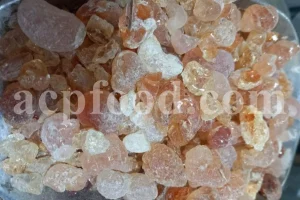
| Form | Tears, granules, or kibbled |
| Color | Pale yellow to amber |
| Solubility | High (water-soluble) |
| Moisture | < 10% |
| Purity | ≥ 99% cleaned |
| Origin | Iran |
| Processing | Natural drying, cleaning, grading |
| Documents Provided | CoA, TDS, Phytosanitary Certificate |
🌍 Why Choose ACPFOOD for Bulk Gum Arabic for Export
-
✔️ Trusted exporter of Bulk Gum Arabic for Export
-
✔️ Excellent emulsifying and stabilizing performance
-
✔️ Suitable for food, pharma, and cosmetic industries
-
✔️ Consistent quality and reliable bulk supply
-
✔️ Export-ready packaging and full documentation
-
✔️ Competitive wholesale pricing
ACPFOOD is a dependable partner for sourcing Bulk Gum Arabic for Export for global markets.
🚚 Delivery Options
🌍 Direct Export from Iran – Available worldwide
🇪🇺 European Union Customers: Delivered DDP from Heppenheim, Germany (MOQ: 500 Kg)
🇨🇦 Canada & 🇨🇳 China: Delivered DDP (MOQ: 500 Kg)
🇺🇸 USA Customers: Delivered DAP (MOQ: 1,000 Kg)
🚢 Other Countries: CIF shipping available worldwide
Other Names in English (UK, USA, Canada, South Africa, Australia, New Zealand): Talh
Synonyms: Acacia modesta Wall.
English Name: Amritsar-gum
Other Names in English (UK, USA, Canada, South Africa, Australia, New Zealand): –
GENERAL DATA
Plant parts: Gum/Resin
Cultivation mode: Wild collection
In manufacturing: Pharmaceutical, toothpaste, ceramic, envelope making, cosmetics, painting, printing ink, stamp, coal, shoe wax, textile, lithography.
In food: Dessert, dairy, food, gelatin, syrup, cola, confectionary, chewing gum, gummi candy, marshmallow, toffee.
🟤 Industries That Use Gum Arabic (Acacia Gum)
From Acacia senegal and Acacia seyal

1. Food & Beverage Industry
Gum Arabic is one of the most widely used natural food additives globally. It is GRAS-certified and accepted in nearly all international food standards (E 414).
Applications:
-
Emulsifier & stabilizer in soft drinks (especially cola)
-
Encapsulation of flavors, vitamins, and essential oils
-
Thickener in candies, chewing gum, jellies, and icings
-
Glazing agent for confectionery and snack coatings
-
Dietary fiber supplement (prebiotic, low-calorie)
✅ Found in products like Coca-Cola, gummy candies, and flavored drink powders
✅ Vegan, allergen-free, and clean-label compatible
2. Pharmaceutical & Nutraceutical Industry
Gum Arabic is widely used as a carrier, stabilizer, and binder in drug formulations.
Uses:
-
Tablet binder and coating agent for controlled release
-
Suspending agent in syrups and emulsions
-
Encapsulation of probiotics or herbal extracts
-
Prebiotic fiber: improves gut flora and mineral absorption
-
Sore throat lozenges and oral dispersible powders
✅ Appears in many OTC medicines, supplements, and pediatric syrups
3. Cosmetic & Personal Care Industry
Thanks to its film-forming and moisturizing effects, Gum Arabic is present in a variety of personal care products.
Applications:
-
Face masks and lift-tightening gels
-
Film-forming agent in mascaras and eyeliners
-
Emulsifier in creams and lotions
-
Stabilizer in herbal hair care or botanical serums
✅ Also used in natural deodorants, tooth powders, and skin protectants
4. Printing, Paint & Adhesive Industry
Due to its binding and viscosity-regulating properties, Gum Arabic plays a role in technical and artistic fields.
Uses:
-
Lithographic printing: keeps non-image areas clean and hydrophilic
-
Watercolor paints: natural binder for pigments
-
Adhesives: label gums, stamps, envelopes
-
Inks and coatings: improves smoothness and flow
✅ Preferred for non-toxic, biodegradable, and eco-safe formulations
5. Textile & Leather Industry
Used as a stiffener or finishing agent for various fabrics and hides.
Applications:
-
Textile printing pastes (as thickener and binder)
-
Enhances fiber strength and surface finishing
-
Applied in leather tanning to improve texture
6. Traditional Medicine & Herbal Applications
Though less emphasized today, Gum Arabic has been used in folk medicine systems.

7. Export & Commodity Trade
Gum Arabic is a major commercial export of Sudan, Chad, Nigeria, and other Sahel countries.
Export Forms:
-
Raw gum nodules (whole tears)
-
Granulated or powdered food/pharma grade
-
Spray-dried encapsulation-grade material
✅ Marketed as Acacia Gum, E414, or Arabic Gum
8. Scientific & Biotechnological Research
Extensively studied for its prebiotic, immunomodulatory, and film-forming potential.
Research Highlights:
-
Gut microbiota regulation and anti-inflammatory effects
-
Biodegradable films for food packaging and drug delivery
-
Antioxidant and anti-diabetic adjunct potential
✅ Recognized as a biocompatible excipient in biomedical sciences
✅ Summary of Key Applications
| Industry | Common Uses |
|---|---|
| Food & Beverage | Emulsifier, flavor encapsulation, dietary fiber additive |
| Pharmaceutical/Nutraceutical | Binder, suspending agent, prebiotic carrier |
| Cosmetic & Personal Care | Film former, emulsifier in gels, serums, mascaras |
| Printing & Adhesives | Lithography, stamp glue, watercolor binder |
| Textile & Leather | Fabric stiffener, tanning agent |
| Traditional Medicine | Demulcent, wound healer, vehicle for herbs |
| Scientific Research | Prebiotic, antioxidant, biodegradable film studies |
🌟 Key Features
-
100% natural, non-toxic, biodegradable, and water-soluble
-
Derived mainly from Acacia senegal (higher grade) and Acacia seyal (lower viscosity)
-
Colorless to pale amber nodules with neutral to slightly sweet taste
-
Central to the Sahelian economy and global food/pharma sectors
-
Used for thousands of years, including in Egyptian ink, medicine, and food
🧪🌿 Comparison Table: Plant-Based Gums
| Property | Gum Arabic (Acacia spp.) | Gum Tragacanth (Astragalus spp.) | Persian Gum (Amygdalus scoparia) | Sarcocolla Gum (Astragalus sarcocolla) |
|---|---|---|---|---|
| Source Plant | Acacia senegal, A. seyal | Astragalus gummifer & relatives | Amygdalus scoparia (wild almond) | Astragalus sarcocolla, Penaea mucronata |
| Geographic Origin | Sudan, Sahel, India | Iran, Turkey, Levant | Iran, Iraq | Iran, Afghanistan, India |
| Botanical Part | Stem exudate | Root/stem exudate | Trunk/bark exudate | Stem/root exudate |
| Form | Rounded amber nodules | Ribbon-like flakes, fibrous lumps | Irregular hard lumps | Reddish translucent tears |
| Water Solubility | Fully soluble | Swells but partially soluble (forms mucilage) | Partially soluble | Poorly soluble; swells slightly |
| Texture in Water | Smooth, viscous solution | Thick mucilage | Weak gel or thick suspension | Very soft mucilage, less cohesive |
| Taste | Bland to slightly sweet | Bland | Slightly bitter or neutral | Slightly bitter-resinous |
| Main Components | Arabinogalactan, glycoproteins | Bassorin, tragacanthin | Polyuronides, sugars | Resin acids, small polysaccharides |
| Industrial Use – Food | Emulsifier in beverages, flavor encapsulation | Stabilizer in sauces, dressings | Rare – sometimes in confectionery | Rare – not widely used in food |
| Industrial Use – Pharma | Excipient, binder, prebiotic | Mucilage for lozenges, ointments | Cough syrups, demulcents | Traditional pastes, Unani medicine |
| Use in Herbal Medicine | Demulcent, coughs, gut health | Anti-inflammatory, gastric ulcers | Cough, respiratory support | Anti-infective, wound healing |
| Use in Cosmetics | Film-former in gels & serums | Skin protectant, lifting masks | Soothing masks, minor hydration | Rare – in ointments, poultices |
| Perfumery/Incense Use | Minor (in fixatives) | None | None | Traditional incense (minor) |
| Global Recognition | FAO, Codex, FDA GRAS | Pharmacopoeias (Iran, Turkey, India) | Local use, traditional systems | Rare – niche and regional use |
| Shelf Stability | Excellent | Very good | Moderate | Fair (can absorb moisture) |
| Cost & Availability | Widely available, low cost | Moderate cost, limited to Middle East | Rare, Iran-specific | Rare, small-scale use |
| Color Range | Pale amber to yellow | Off-white to pale brown | White to golden | Reddish to amber |
📌 Summary Notes
✅ Gum Arabic
-
Industry-standard in food, beverage, and pharma.
-
Fully water-soluble, with smooth texture and excellent emulsification.
-
Most widely exported and globally regulated among all.
✅ Gum Tragacanth
-
Known for its mucilage-forming power.
-
Used in both modern and traditional medicine, including oral gels, herbal pastes, and wound care.
-
Excellent for skin care products due to viscous gel formation.
✅ Persian Gum
-
Local/regional ingredient from Iran’s wild almond trees.
-
Used mainly in traditional herbal syrups, cough remedies, and soothing skin formulas.
-
Less commercially known globally, but valuable in Persian and Islamic medicine systems.
✅ Sarcocolla Gum
-
Rarely used today, but historically valued in Unani and Ayurvedic medicine.
-
Mildly bitter, sometimes used for oral ulcers, wounds, or in pediatric remedies.
-
Limited commercial viability, more niche and ethnobotanical.
🧾 Quick Use Matrix
| Gum | Food Industry | Pharmaceuticals | Herbal Medicine | Cosmetics | Commercial Availability |
|---|---|---|---|---|---|
| Gum Arabic | ✅✅✅ | ✅✅ | ✅ | ✅ | Global, very common |
| Gum Tragacanth | ✅ | ✅✅ | ✅✅ | ✅✅ | Limited to Middle East |
| Persian Gum | 🚫 (rare) | ✅ | ✅✅✅ | ✅ | Regional, Iran |
| Sarcocolla Gum | 🚫 | ✅ | ✅✅ | 🚫 | Rare, niche |
PRODUCT NAME IN DIFFERENT LANGUAGES
Persian Name: صمغ عربی/ Samgh-e-Arabi
German Name (Deutschland, Austria, Switzerland): Gummi Arabicum
French Name (France, Belgium, Switzerland, Quebec): Gomme Arabique
HARVEST CALENDAR
Feb
Mar
Apr
May
Jun
Jul
Aug
Sep
Oct
Nov
Dec
To order Arabic Gum, please contact us.

The best Gum Arabic is pure, semi-transparent, clear, and yellowish.
The leaves of Acacia tree are small and grow in compound form and reciprocally. Each leaf consists of very small and almost oval leaflets, which also grow reciprocally. The taste of the leaves of this tree is astringent. Its flowers are small, yellow, and fragrant. Each flower is a collection of narrow and abundant filaments that grow concentrically and spherically. Its fruits grow in the form of relatively narrow, elongated, pointed, pale green and whitish pods. Each sheath contains circular and relatively wide tanks, inside each tank there is a circular, relatively wide, and dark brown nucleus.
Arabic Gum Chemical Constituents
Minerals, Arabinogalactan, two types of sugars called Arabinose and Galactose, Water, Tannin, Tanoside, Several Diastases called Oxidase and Peroxidase – Amylase and Emulsion.
Acacia Gum Temperament
Its temperament is moderate and dry at the second degree.

3. If you put it in the mouth and swallow the water little by little, it will prevent spills of phlegm into the chest, it will relieve the severity of hot-temperament medicines, to relieve cough and chest pain, lung wounds and scratches, sore throat, trachea obstruction and clearing the voice are beneficial.
4. Mix smashed Gum Arabic with egg white and poultice it on the skin part which has burnt with fire or the fissure of the nipple, it is healing.
5. If you mix 5g of pulverized Gum Arabic with Carrot juice every day and rub it on the face and wash your face with warm water after 15 minutes, it will remove the wrinkles on the face.
6. Mix its powder with kohl and make it a suppository and put it in the uterus at night. It will treats excessive menstruation.
Gum Arabic Side Effects
Harmful to bladder and hemorrhoids.
Acacia Gum Modifier
✅ Nutrition Facts – Gum Arabic (Acacia Gum)
Common Name: Gum Arabic
Scientific Source: Acacia senegal, Acacia seyal
Form: Dried granules or powder
Serving Size: 5 grams (approx. 1 teaspoon)
Reference Values: Per 100 grams (powdered form)
| Nutrient | Per 100g |
|---|---|
| Energy | 285 kcal |
| Protein | <1 g |
| Total Fat | 0 g |
| – Saturated Fat | 0 g |
| Carbohydrates | 93–95 g |
| – Sugars | <0.5 g |
| – Dietary Fiber | 90–92 g (soluble) |
| Moisture | ~5% |
| Ash (Minerals) | 1–2 g |
🔹 Dietary Fiber Type: Soluble, non-viscous, fermentable (acts as a prebiotic)
🧂 Minerals
| Mineral | Per 100g | % Daily Value (approx.) |
|---|---|---|
| Calcium | 170 mg | 17% |
| Magnesium | 65 mg | 16% |
| Potassium | 200 mg | 6% |
| Iron | 0.6 mg | 3% |
| Sodium | Trace | — |
| Phosphorus | 45 mg | 6% |
| Zinc | 0.3 mg | 2% |
🍃 Vitamins (Minimal content)
| Vitamin | Per 100g |
|---|---|
| Vitamin C | 0 mg |
| B Vitamins | Trace only |
Gum Arabic is not a significant source of vitamins.
🌿 Functional Compounds & Benefits
| Constituent | Function / Effect |
|---|---|
| Arabinogalactan proteins (AGPs) | Immune-modulating, gut flora support |
| Soluble polysaccharides | Prebiotic fiber, colon health |
| Glycoproteins | Emulsifying & stabilizing properties |
🧪 Key Health Benefits
| Benefit | Details |
|---|---|
| Prebiotic | Feeds beneficial gut bacteria (e.g., Bifidobacteria) |
| Cholesterol-lowering | Helps reduce LDL cholesterol in some cases |
| Blood sugar control | Slows glucose absorption |
| Weight management | Enhances satiety due to high fiber |
| Oral health | Used in lozenges, protective for mucosa |
🧴 Industrial & Medicinal Uses
| Industry | Application |
|---|---|
| Food | Emulsifier, stabilizer, dietary fiber source |
| Pharmaceutical | Binder in tablets, suspending agent |
| Cosmetics | Ingredient in creams, lotions, and masks |
| Printing & Art | Component of watercolors and lithographic gum |
| Traditional medicine | Used as demulcent, mild laxative, wound dressing |
⚠️ Safety & Handling
-
Generally Recognized as Safe (GRAS) by FDA.
-
Well-tolerated up to 30g/day.
-
Excess intake may cause bloating or gas initially.
-
Highly hygroscopic – store in airtight containers in dry conditions.
-
Used safely in food and pharma for centuries.
To order Arabic Acacia, please contact us.


Reviews
There are no reviews yet.