


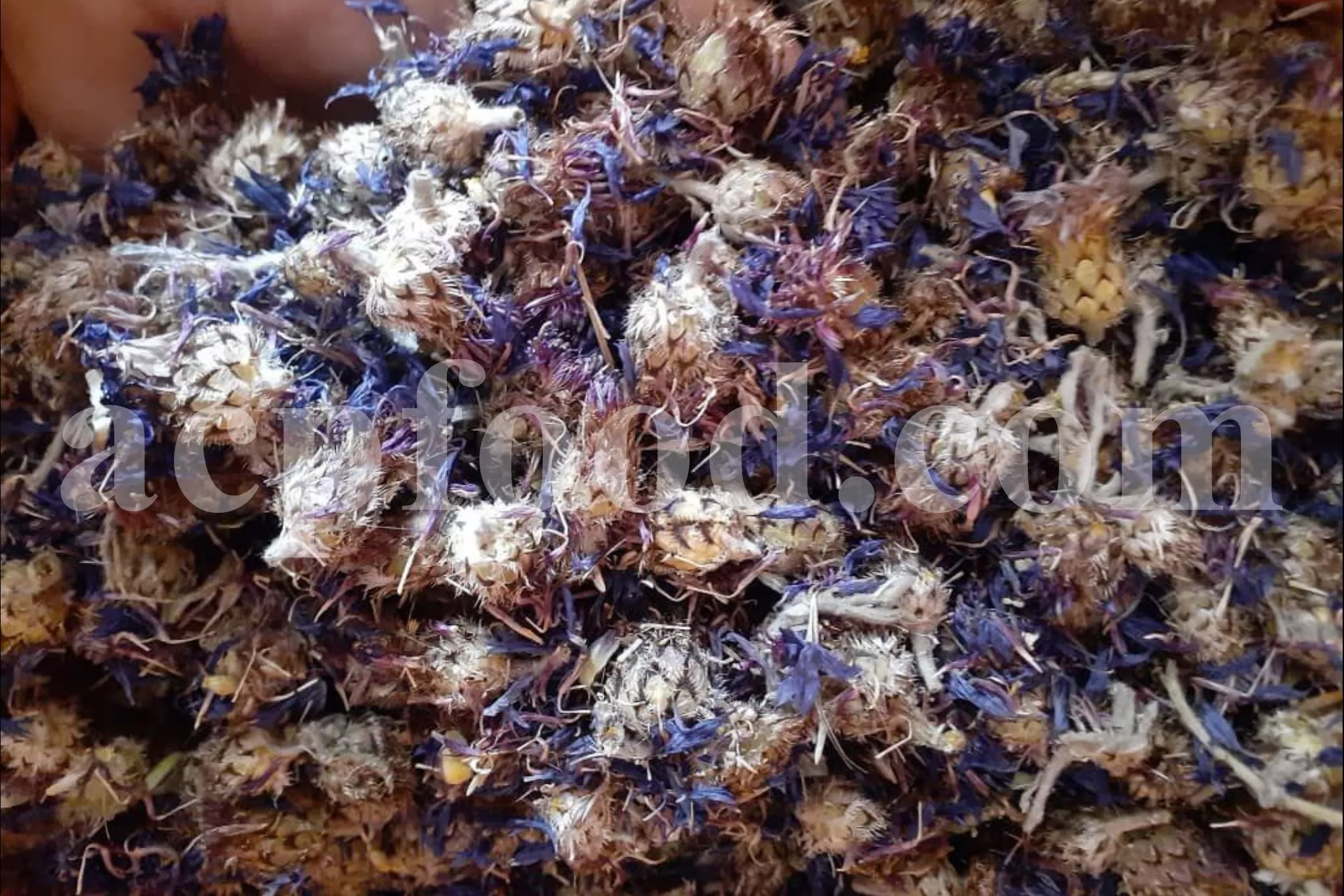
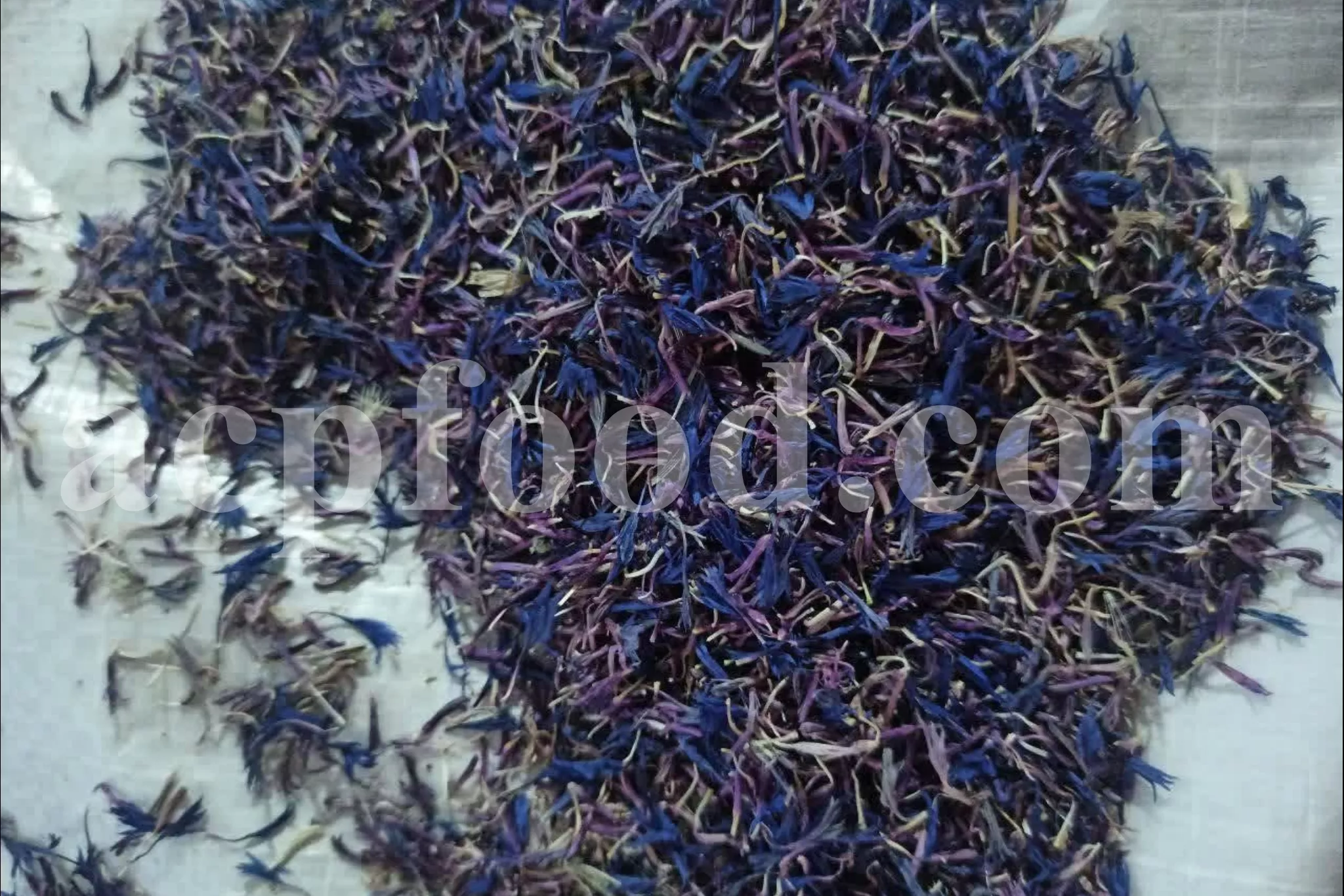


Bulk Blue Cornflower for Export
ACPFOOD supplies bulk blue cornflower for export to wholesalers, importers, and distributors worldwide. Our premium Centaurea cyanus flowers, also known as bachelor’s button or dried cornflower, are carefully selected and dried to preserve their vibrant color and natural aroma. As a trusted dried cornflower supplier and bachelor’s button exporter, ACPFOOD ensures consistent quality, competitive pricing, and timely delivery for bulk flower trading. Our products are ideal for herbal tea manufacturers, cosmetic industries, and natural food ingredient suppliers seeking top-grade blue cornflower petals.

GENERAL DATA
Plant Parts: Flowers and leaves
Cultivation Mode: Wild collection/ Cultivated
In Manufacturing: Pharmaceutical, tea, cosmetics, extract, oil
In Food: Pottages
🌸 Industries That Use Cornflower Petals (Centaurea cyanus L.)
Cornflower petals, also known as Bachelor’s Button, are the bright blue flowers of Centaurea cyanus L., a member of the Asteraceae family. Native to Europe and widely cultivated for ornamental and herbal use, these petals are valued for their anti-inflammatory, antioxidant, and astringent properties.
1. Pharmaceutical & Herbal Medicine Industry
Cornflower petals are used in natural and traditional medicine for mild inflammatory conditions and eye health.
Key Applications:
-
Mild anti-inflammatory and antimicrobial remedy
-
Used in herbal compresses for eye irritation, conjunctivitis, and tired eyes
-
Occasionally used for mild digestive or respiratory discomfort
✅ Often used as infused water, decoctions, or eye lotions
2. Cosmetic & Skincare Industry
Highly prized in natural beauty and skincare, particularly for sensitive and mature skin.
Uses:
-
Soothing facial toners, especially for puffy or tired eyes
-
Anti-redness and calming lotions
-
Floral water (hydrosol) for delicate skin
-
Ingredient in bath blends or skincare masks
✅ Favored in micellar waters, makeup removers, and under-eye gels
3. Tea & Beverage Industry
Cornflower petals are widely used for aesthetic and functional purposes in teas and infusions.

4. Perfumery & Aromatherapy Industry
Used in botanical fragrance products for its delicate and subtle floral notes.
Applications:
-
Aromatic sachets and natural potpourri
-
Added to botanical incense
-
Used as a decorative and aromatic element in bath salts and soaps
✅ Often included for its visual elegance and mild scent
5. Natural Dye & Textile Industry
The vibrant blue petals can be used for plant-based textile dyeing and handmade paper crafting.
Applications:
-
Craft dyes and natural paper decorations
-
Added to handmade soaps, candles, or crafts for color
✅ Considered a gentle, non-toxic natural dye
6. Gourmet & Culinary Industry
Used as a decorative edible flower in premium culinary applications.
Uses Include:
-
Garnish for salads, pastries, and desserts
-
Blended into flower sugars, syrups, or artisan liqueurs
-
Adds visual charm without strong taste
✅ Certified edible and safe for use in food decoration
7. Organic & Natural Product Market
A staple in organic apothecaries, tea shops, and handmade beauty brands.
Forms Available:
-
Whole dried petals (bulk or packaged)
-
Floral water (hydrosol)
-
Herbal sachets and craft kits
✅ Widely available in eco-conscious wellness stores
✅ Summary of Key Applications
| Industry | Common Uses |
|---|---|
| Pharmaceutical & Herbal | Eye compress, soothing infusions, mild anti-inflammatory |
| Cosmetic & Skincare | Eye toners, calming creams, floral waters |
| Tea & Beverage | Decorative tea blends, mild relaxation infusions |
| Perfumery & Aromatherapy | Potpourri, botanical incense, floral bath blends |
| Natural Dye & Textile | Craft dyes, soap making, handmade paper |
| Gourmet & Culinary | Edible decorations, artisan liqueurs, floral garnish |
| Organic/Natural Products | Bulk petals, sachets, handmade products |
🌟 Key Features:
-
Brilliant blue pigment with mild floral aroma
-
Known for anti-inflammatory and astringent properties
-
Gentle enough for eye care and sensitive skin
-
Edible and cosmetic-grade flower
-
Valued across herbal, cosmetic, and culinary markets
PRODUCT NAME IN DIFFERENT LANGUAGES
Persian Name: گل گندم- ترنشاه/ Gole Gandom- Taranshah
German Name (Deutschland, Austria, Switzerland): Kornblume, Kornblume getrocknet
French Name (France, Belgium, Switzerland, Quebec): Bleuet, Bleuet pétales
HARVEST CALENDAR
Feb
Mar
Apr
May
Jun
Jul
Aug
Sep
Oct
Nov
Dec
To order Centaurea cyanus flowers, please contact us.
About Centaurea Cyanus
Centaurea cyanus is a one-year plant whose height reaches seventy centimeters.
The stems of this plant are relatively thin and hairy and their cross section is circular.
The leaves of the Centaurea cyanus plant are narrow, elongated, pointed and slightly hairy and grow without petioles. The lower leaves of this plant are slightly longer and wider.

After fully ripening and drying, these bulges split open and turn pale brown. Many elongated, almost oval, grayish-white, sometimes brown seeds can be seen inside each bulge.
The corner of each seed has a well-defined notch.
Cornflower Temperament
Third degree of hot and dry.
Cornflower Chemical Constituents
Chichorigenin, Cyanidin, Cyanidol, Cyanoside, Centaurin.
Cornflower Health Benefits
Cornflower is fattening, sexual power enhancer, erectile, stone breaker, and diuretic.
Cornflower cures dysuria, jaundice, liver diseases and fever. Eating it with apple juice stops bleeding. Its poultice improves bleeding, Psoriasis, and scurf.
The flowers of this plant are used in the form of an infusion as a diuretic for polydipsia patients. It also softens the chest and relieves cough in colds and hoarseness. A decoction of the stems, flowers and leaves of the plant has an antipyretic effect.
The seeds of this plant are laxative.
In India, the flowers of this plant are used as emmenagogue.
Its flowers can be used to color some foods due to its red pigment.
Cornflower Dose
3 grams.
Cornflower Side Effects
It can cause nausea.
Cornflower Modifiers
Rhubarb and Pomegranate.
🧾 Nutrition Facts – Dried Cornflower Petals (Centaurea cyanus L.) (Per 100g)
Botanical Name: Centaurea cyanus L.
Common Names: Cornflower, Bachelor’s Button, Bluebottle
Part Used: Dried petals (flower only)
Culinary and Traditional Use: Used as a natural food colorant and garnish in teas, confections, and salads; historically applied in traditional herbal infusions for eye and skin support
🔹 General Composition (Per 100g, dried)
| Nutrient | Amount | % Daily Value (DV) |
|---|---|---|
| Calories | ~252 kcal | 13% |
| Water (residual) | ~9 g | — |
| Protein | ~7.8 g | 16% |
| Total Fat | ~4.1 g | 5% |
| • Saturated Fat | ~0.9 g | 5% |
| Carbohydrates | ~45 g | 16% |
| • Dietary Fiber | ~19.3 g | 69% |
| • Natural Sugars | ~2.6 g | — |
✅ A high-fiber, low-sugar floral ingredient with moderate protein content
🔬 Mineral Content
| Mineral | Amount | %DV |
|---|---|---|
| Potassium | 664 mg | 14% |
| Calcium | 184 mg | 14% |
| Iron | 6.8 mg | 38% |
| Magnesium | 86 mg | 21% |
| Phosphorus | 73 mg | 6% |
| Zinc | 1.1 mg | 10% |
| Copper | 0.28 mg | 31% |
| Manganese | 1.9 mg | 83% |
| Selenium | 1.7 mcg | 3% |
💎 Notably high in fiber, manganese, iron, and magnesium—supportive of digestion and cellular metabolism
🌿 Vitamin Content
| Vitamin | Amount | %DV |
|---|---|---|
| Vitamin C | 9.4 mg | 10% |
| Niacin (Vitamin B3) | 2.3 mg | 14% |
| Riboflavin (B2) | 0.21 mg | 16% |
| Thiamine (B1) | 0.08 mg | 7% |
| Folate (B9) | 31 mcg | 8% |
| Vitamin A (RAE) | 51 mcg | 6% |
| Vitamin E | 1.2 mg | 8% |
🌱 Offers a spectrum of antioxidant and B-complex vitamins with mild nutritive value
🧪 Phytochemical & Bioactive Compounds
-
Anthocyanins – Cyanidin and delphinidin derivatives responsible for blue coloration and antioxidant properties
-
Centaurein – A unique flavonoid glycoside with anti-inflammatory and cytoprotective potential
-
Polyphenols – General antioxidant action; may support vascular tone
-
Bitter Sesquiterpenes – Traditionally associated with digestive and liver benefits
-
Mucilage – Soothing compound for topical and internal use
🩺 Health Benefits
| System | Potential Effects |
|---|---|
| Ocular Health | Traditionally used in eyewashes for inflammation and fatigue |
| Skin Support | Antioxidants and mucilage aid in tissue regeneration |
| Digestive | Bitters and fiber may enhance motility and bile flow |
| Detoxification | Historically considered a liver and kidney tonic |
| Immune System | Polyphenols may assist in mild immune modulation |
⚖️ Primarily used in gentle herbal infusions, with supportive benefits for eyes, skin, and digestion
⚠️ Usage & Safety Notes
-
Typical Serving (Herbal Use): 1–2 teaspoons per cup for tea; a pinch for garnishes
-
Contraindications: Avoid during pregnancy due to uterine stimulant potential (traditional concern)
-
Allergic Potential: Rare; possible in those sensitive to Asteraceae family
-
Medical Use: Not for internal use at high doses or concentrated extracts without guidance
📦 Storage Guidelines
-
Store in opaque, airtight containers
-
Keep in a cool, dry place away from sunlight
-
Shelf life: 12–18 months under proper conditions
📌 Disclaimer
This profile is intended for educational, cosmetic, and food cataloguing use. Nutritional and phytochemical content may vary depending on species variant, soil, and drying method.
To order dried Cornflowers, please contact us.


Reviews
There are no reviews yet.