
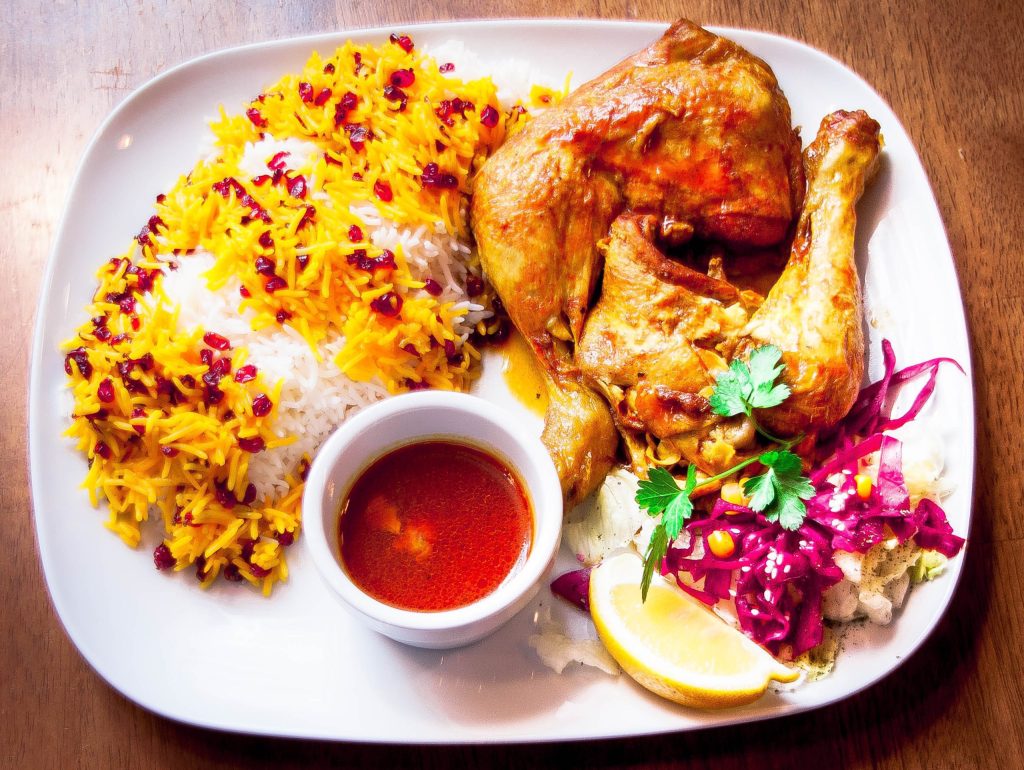
Zereshk Polo with Chicken is one of the most famous and beloved Persian dishes and is especially popular for important celebrations, family gatherings, weddings, and other special ceremonies. This delicious combination of fragrant rice, flavorful chicken, tangy barberries, and aromatic saffron creates a beautiful balance of colors, flavors, and aromas. The contrast between the sweet and savory rice, the sour taste of barberries, and the distinctive fragrance of saffron is one of the characteristics that makes this traditional Persian dish so special and appealing.
From the perspective of Persian Traditional Medicine, this dish also contains ingredients with different temperaments and traditional properties. Barberry is traditionally considered a cold and dry food and is valued for its traditional role in strengthening and supporting the liver and helping to moderate excessive heat. Saffron, on the other hand, is traditionally considered hot and dry and is one of the most valuable and highly regarded Persian spices. It is also traditionally described as an enlivening and uplifting medicinal herb, which is why saffron has long been used in Persian cuisine as well as in traditional medicinal preparations.
The combination of these ingredients is also interesting from the traditional perspective because their different qualities are considered when preparing the dish. Zereshk Polo with Chicken contains rice, chicken, barberries, saffron, and other ingredients, each of which has its own traditional temperament and characteristics. According to Persian Traditional Medicine, combining foods with different temperaments can create a more balanced meal, making this dish suitable for many different temperaments when consumed appropriately.
For example, if there is a person in your family who feels sad or cheerless, you can traditionally add a little more saffron to the rice to enhance its beautiful aroma and uplifting qualities. On the other hand, if you have an energetic youngster with a hot temperament who often complains about pimples or excessive body heat, adding more barberries can provide a pleasantly sour flavor while introducing an ingredient traditionally considered cold and dry. The combination of sweet, sour, aromatic, and savory flavors makes this dish enjoyable while also reflecting the traditional Persian approach of considering the temperament of different foods when preparing meals.
For this reason, Zereshk Polo with Chicken is more than simply a colorful and delicious Persian rice dish. It is also an excellent example of how traditional Iranian cuisine brings together different ingredients, flavors, aromas, and temperaments. At ACPFOOD, we aim to introduce the traditional characteristics of Iranian herbs, spices, fruits, and foods and share the rich culinary and traditional heritage of Iran with readers around the world. By understanding the traditional characteristics of its main ingredients, we can appreciate this classic Persian dish from both a culinary and a traditional Iranian medicine perspective.
Table of Contents
ToggleIngredients of Zereshk Polo with Chicken
- 4 pieces of chicken
- 2 medium onions
- 2 cups of dried barberries
- 4 cups of rice
- 75 g of sliced almonds
- 75 g of sliced pistachios
- 4 tablespoons of sugar
- Oil, salt, rose water, and saffron as needed
These ingredients come together to create the distinctive combination of flavors, aromas, colors, and textures that makes Zereshk Polo with Chicken one of the most popular Persian rice dishes. The tangy flavor of barberries, fragrant saffron and rose water, sweetened barberries, and crunchy nuts complement the rice and chicken beautifully.
Instructions for Making Zereshk Polo with Chicken
- Cook the chicken: Heat some oil in a suitable pot and fry the chicken pieces together with the chopped onions for about 20 minutes, turning the chicken occasionally so that it cooks evenly. Add the tomato paste and continue frying for another 2 minutes. Then add 2 cups of boiling water, cover the pot, and allow the chicken to cook until tender and well-flavored.
- Add saffron and rose water: When the chicken sauce has reduced by about half and the chicken is completely cooked, add 2 tablespoons of brewed saffron and rose water to the sauce. Stir gently to distribute the flavors, then allow the chicken to cook for another 10 minutes so that it absorbs the fragrant saffron and rose water.
- Prepare the barberry mixture: In a separate pan, add 1 tablespoon of liquid oil, the barberries, 1 tablespoon of rose water, sliced pistachios, sliced almonds, and sugar. Stir the ingredients gently over low to moderate heat until the sugar dissolves and the ingredients are well combined. Remove the pan from the heat as soon as the sugar has dissolved. Do not keep the mixture on the heat for too long, as prolonged heating can darken the barberries and give them a bitter taste.
- Cook and steam the rice: Wash the rice thoroughly and place it in a suitable pot. Add enough water to cover the rice, with the water level reaching approximately one fingertip above the surface of the rice. Add a tablespoon of oil and a small amount of salt. Bring the rice to a boil and cook it over a moderate flame for about 15 minutes. Once most of the water has evaporated and the rice is partially cooked, reduce the heat, cover the pot with a lid, and allow the rice to steam for approximately 45 minutes until it is completely cooked and fluffy.
- Prepare the saffron and barberry rice: Place about one-third of the cooked rice in a separate bowl. Add 2 tablespoons of brewed saffron, the prepared barberries, sliced pistachios, and almonds. Gently mix the ingredients with a spoon until the saffron and other ingredients are evenly distributed throughout the rice.
- Layer and serve: When you are ready to serve, place a layer of the saffron-colored rice mixed with barberries and nuts in the serving dish, followed by a layer of plain rice. Continue alternating the layers until all the rice has been used, creating approximately three layers. Arrange the cooked chicken pieces in a separate serving dish or place them alongside the rice. Your fragrant and colorful Zereshk Polo with Chicken is now ready to serve and enjoy.
How to Brew Saffron
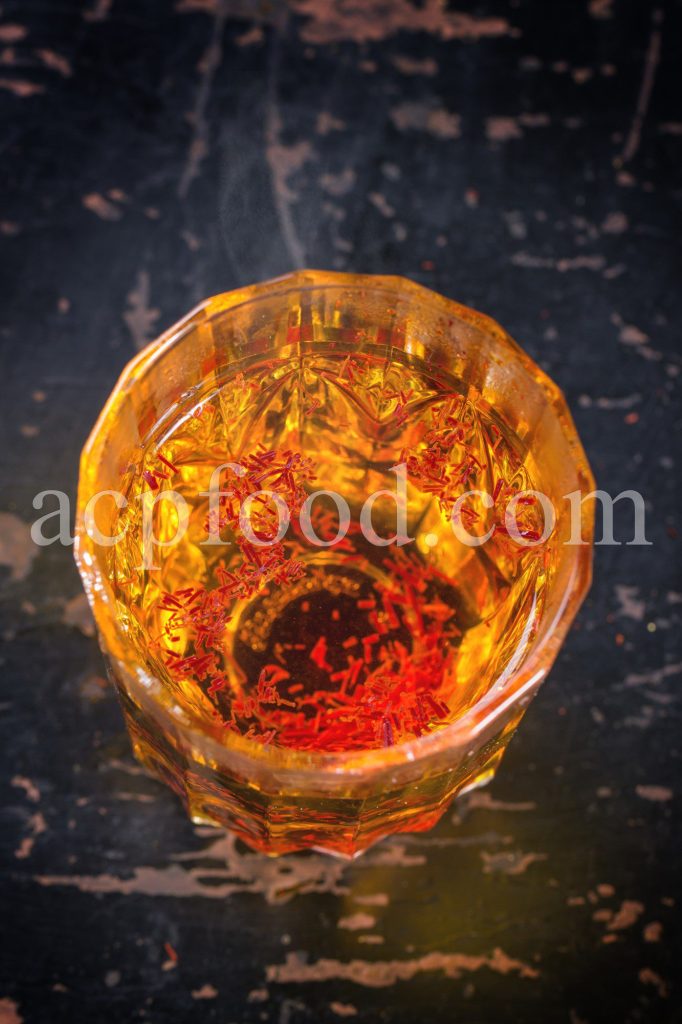
Pour ⅓ teaspoon of saffron into a cup and add ¼ cup of boiling water. Cover the cup with a lid and place it on a kettle or another warm surface. Allow the saffron to brew gently for approximately 15 minutes. This method helps release the saffron’s beautiful color, distinctive aroma, and rich flavor, making it ready to use in Zereshk Polo with Chicken and other Persian dishes.
Conclusion
Zereshk Polo with Chicken is a delicious and colorful Persian dish that combines fragrant rice, tender chicken, tangy barberries, aromatic saffron, rose water, and nutritious nuts. Its distinctive combination of sweet, sour, savory, and aromatic flavors makes it a popular choice for family gatherings, celebrations, weddings, and other special occasions. With the right preparation, each ingredient contributes its own unique flavor, aroma, texture, and character to the final dish.
From the perspective of Persian Traditional Medicine, the ingredients used in this dish also have different traditional temperaments and properties. Barberries are traditionally considered cold and dry, while saffron is considered hot and dry, and other ingredients contribute their own qualities. The combination of these ingredients is one reason this traditional Persian dish can be viewed not only as a delicious meal but also as an interesting example of the relationship between Persian cuisine and the principles of traditional Iranian medicine.
At ACPFOOD, we are pleased to introduce traditional Iranian foods and the herbs, spices, fruits, and natural ingredients that have played an important role in Persian culinary and traditional medicinal practices. We hope this recipe helps you prepare an authentic and flavorful Zereshk Polo with Chicken while also giving you a better understanding of the traditional characteristics of its ingredients. Whether you prepare it for a special celebration or simply want to enjoy a classic Persian meal at home, this beautiful dish is a wonderful representation of the rich culinary heritage of Iran.