
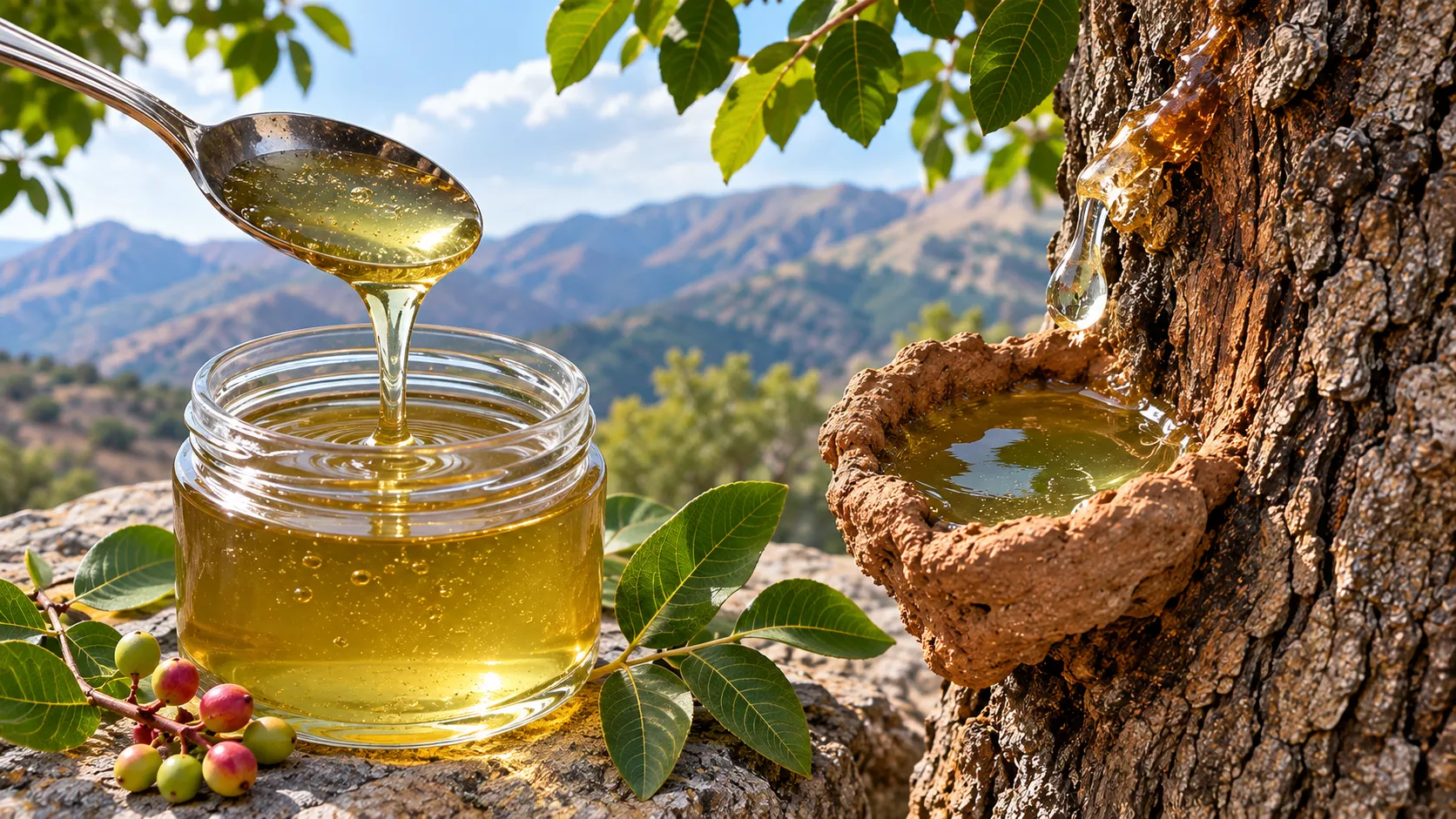
A technical guide to the botanical origin, chemical composition, traditional collection, and industrial relevance of Persian Turpentine Resin.
Table of Contents
ToggleIntroduction
Natural plant resins have served as valuable raw materials for centuries, contributing to traditional crafts, aromatic products, and specialized industrial processes.
Among these materials is Persian Turpentine Resin, a naturally aromatic oleoresin obtained from Pistacia atlantica Desf., a wild pistachio tree belonging to the Anacardiaceae family.
Known in Iran as Saqez (سقز), the resin has a long history of collection in mountainous regions. Today, its distinctive aroma and complex chemical composition make it of interest to manufacturers, formulators, botanical ingredient researchers, and specialized raw-material buyers.
This guide examines Persian Turpentine Resin from a scientific and industrial perspective, focusing on its botanical identity, chemical constituents, collection, processing, potential applications, and sourcing considerations.
What Is Persian Turpentine Resin?
Persian Turpentine Resin is a natural oleoresin produced by Pistacia atlantica, commonly known as the Atlas Pistachio Tree, Atlantic Pistachio, or Wild Pistachio.
The term oleoresin describes a resinous botanical material containing aromatic volatile constituents alongside less-volatile and nonvolatile resin compounds.
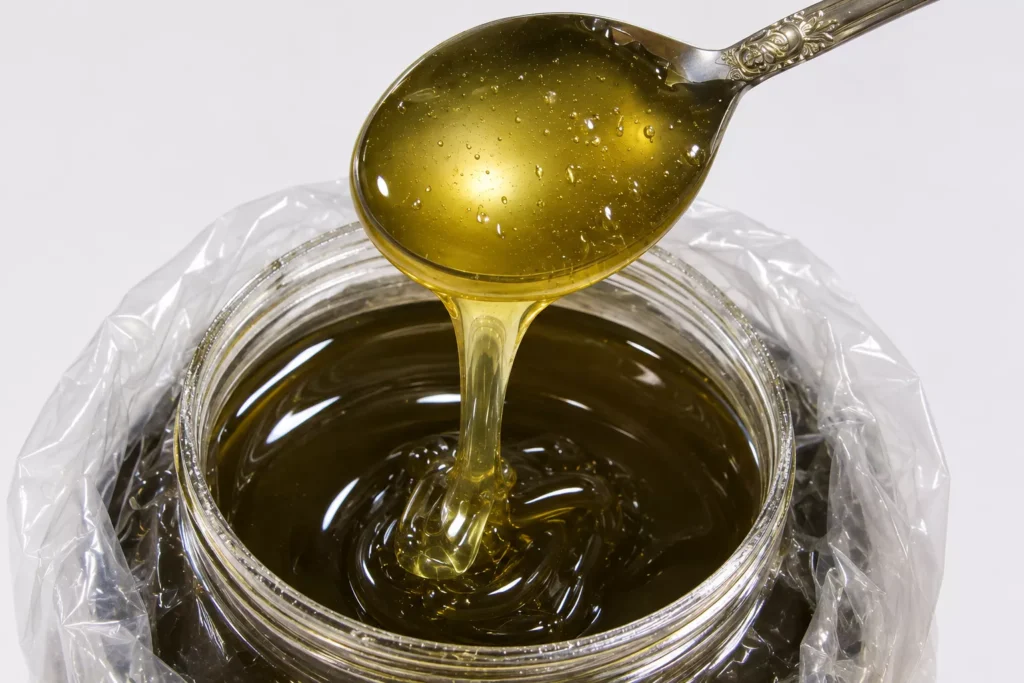
In the form supplied by ACPFOOD, Persian Turpentine Resin is a thick, sticky, and viscous material that flows slowly. Its consistency may vary depending on temperature, collection conditions, and storage.
Its color may range from pale yellow or amber to greenish-brown and darker brown shades, while its aroma is generally described as resinous, balsamic, woody, and characteristically turpentine-like.
Although the material is sometimes commercially called Persian Turpentine Gum, it should be distinguished from water-soluble botanical gums such as gum tragacanth or gum arabic.
It should also not be confused with conventional pine-derived industrial turpentine.
Botanical Origin: Pistacia atlantica Desf.
Pistacia atlantica is a member of the Anacardiaceae family, which also includes the cultivated pistachio (Pistacia vera).
The species is native to a broad geographic region extending from the Mediterranean through western Asia, including Iran.
Wild pistachio trees are particularly associated with mountainous and semi-arid environments. Their adaptation to relatively dry conditions makes them an important component of certain regional forest ecosystems.
In Iran, wild pistachio populations occur across parts of the Zagros Mountains and several other regions.
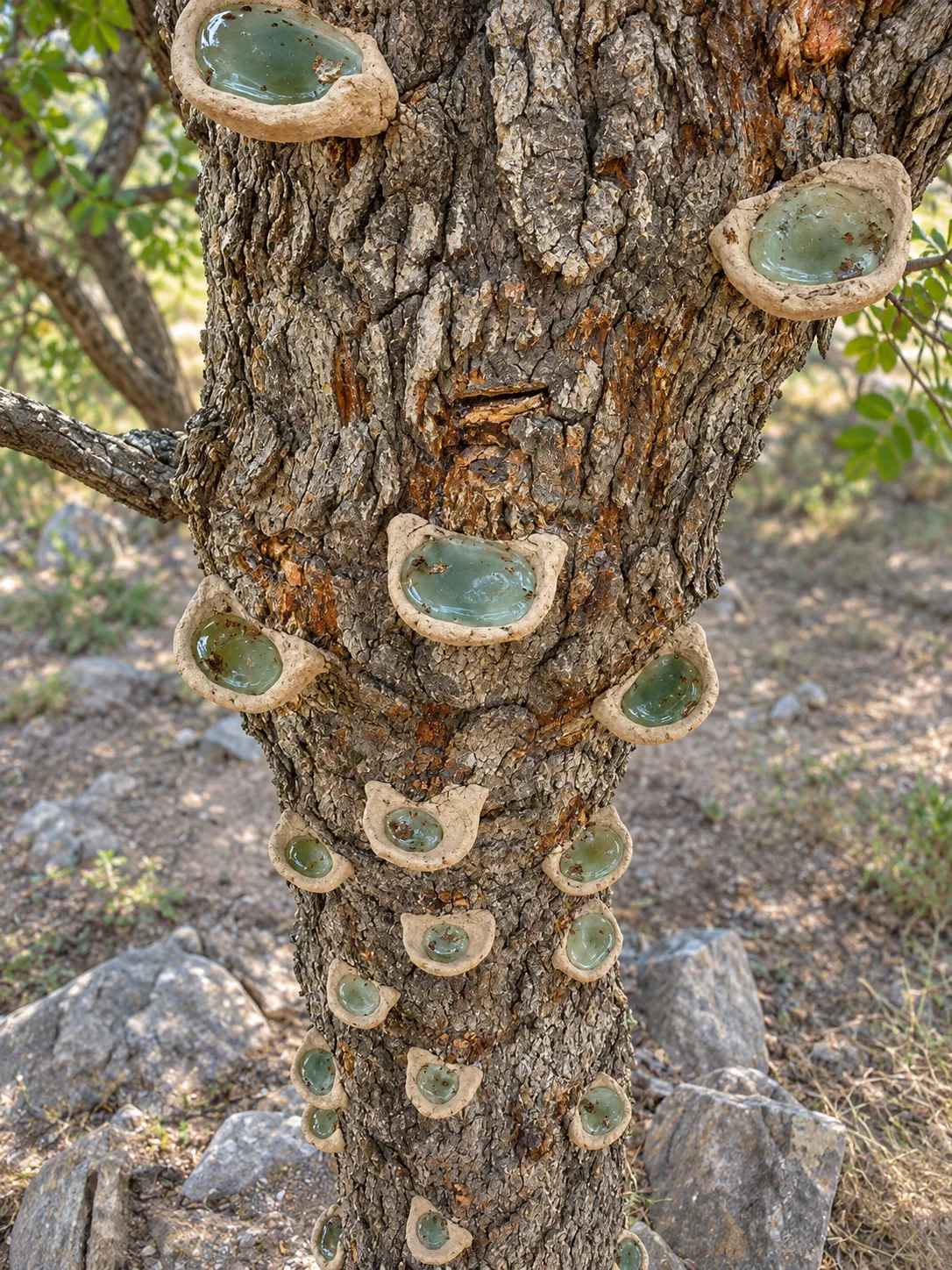
The botanical identity of the source tree is essential for commercial resin sourcing.
Several Pistacia species produce resinous materials, and their traditional names sometimes overlap.
For example, Pistacia atlantica, Pistacia khinjuk, Pistacia eurycarpa, and Pistacia lentiscus are distinct botanical taxa. Their materials should not be treated as interchangeable merely because they share regional names such as Saqez, mastic, or turpentine.
Modern botanical references, including the Royal Botanic Gardens, Kew, provide a foundation for accurate species identification.
Persian Turpentine Resin in Iran's Botanical Heritage
The historical importance of Persian Turpentine Resin extends beyond its aromatic properties.
In Ma’aref-e Giahi by Hossein Mirheydar, the wild pistachio tree is described under regional names including Baneh and Chatlanqoush.
The text records the extraction of a resinous substance from the tree and mentions its historical use in painting and dyeing.
Another Persian reference, Mofradat by Seyed Mohammad Ali Seyed Nazari, describes Saqez as a resinous exudate obtained naturally or through incisions in the tree.
The book also records aromatic constituents associated with the resin, including α-pinene, camphene, limonene, and α-terpineol.
These historical references illustrate the established recognition of the material in Iran’s botanical and industrial traditions.
Their descriptions provide useful historical context, while modern analytical studies are needed to establish chemical specifications and suitability for contemporary manufacturing applications.
Collection and Processing of Persian Turpentine Resin
The resin is produced by the tree and may be released from natural injuries or collected through controlled tapping.
Traditional resin collectors have developed local knowledge of suitable collection periods, tree conditions, and methods of handling the exudate.
In western Iran, including Kurdistan and Kermanshah, collection of wild pistachio resin has longstanding economic significance for some rural communities.
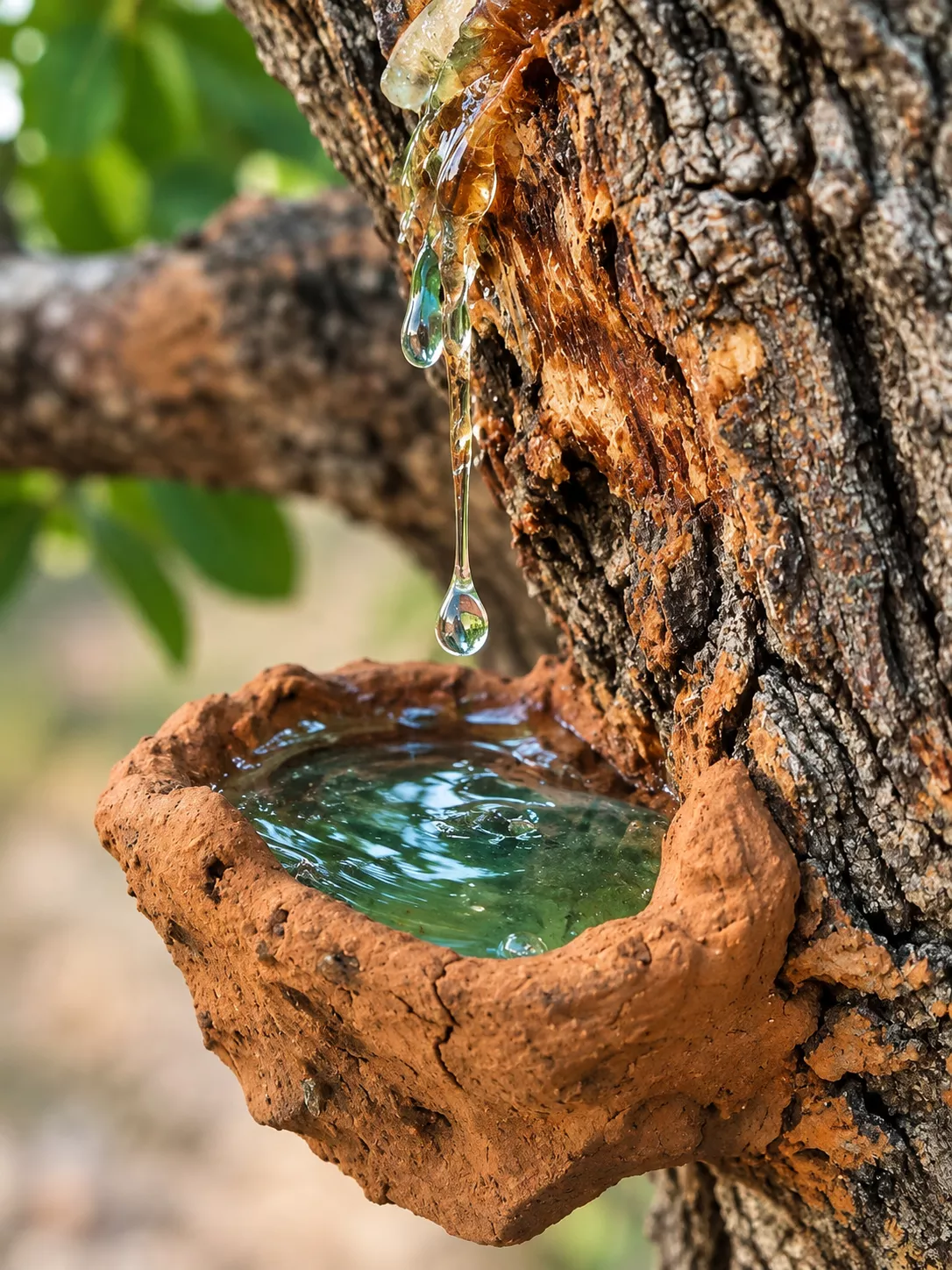
Following collection, the crude material may undergo several preparation stages, depending on its intended commercial application.
These may include the removal of visible foreign matter, sorting, grading, and preparation in an agreed physical form.
Fresh Persian Turpentine Resin is characteristically sticky and viscous. Its color, consistency, and handling properties may vary depending on temperature, collection conditions, and storage.
For industrial buyers, these differences matter. Variations in viscosity, physical appearance, and the presence of natural impurities can influence handling, processing, and suitability for particular formulations.
The material’s collection history, botanical identity, storage conditions, and processing should therefore form part of the sourcing discussion.
Chemical Composition of Pistacia atlantica Resin
One of the most scientifically interesting aspects of Persian Turpentine Resin is its complex terpene chemistry.
Its composition can be understood through two broad groups: volatile aromatic constituents and less-volatile resin compounds.
Volatile Aromatic Constituents
Research on the essential-oil fraction of Pistacia atlantica resin has identified monoterpenes and related aromatic constituents, including:
α-Pinene: Frequently reported as a major constituent of the resin’s volatile fraction.
β-Pinene: Another important monoterpene associated with the characteristic aroma of many resinous botanical materials.
Camphene: A naturally occurring monoterpene reported in botanical references describing the resin.
Limonene: A monoterpene found in various aromatic plant materials.
Oxygenated terpenes: Including compounds such as α-terpineol and other constituents, depending on the analyzed sample.
The relative concentrations can vary considerably between studies.
In a 2022 study by Elyasi Ghahfarrokhi and colleagues, researchers analyzed essential oil obtained from Pistacia atlantica oleoresin collected in Javanrud, Kermanshah Province, Iran. Gas chromatography–mass spectrometry (GC-MS) identified 19 compounds, with α-pinene representing 64.8% of the analyzed essential oil, followed by β-pinene (5.7%) and cis-limonene oxide (4.5%).
A separate study by Barrero and colleagues (2005) reported α-pinene (42.9%) and β-pinene (13.2%) as the major constituents of essential oil distilled from Pistacia atlantica resin.
These findings illustrate the chemical variability reported between samples and studies. Differences in botanical source, geographic origin, collection conditions, extraction methods, and analytical procedures may influence the resulting profiles.
Importantly, these percentages refer to the essential-oil fractions analyzed in the published studies, not to the composition of ACPFOOD’s crude Persian Turpentine Resin.
For industrial buyers requiring specific terpene concentrations, chemical specifications should be established through appropriate batch-specific analysis and agreed testing methods.
Less-Volatile Resin Constituents
In addition to volatile aromatic compounds, Pistacia atlantica resins contain triterpenoid constituents.
Published research has identified compounds including oleanolic acid, ursonic acid, masticadienonic acid, and related triterpenoid derivatives.
These constituents contribute to the chemical complexity of the resin and are relevant to phytochemical characterization and specialized material analysis.
For buyers requiring detailed compositional information, the choice of analytical method should reflect whether the objective is to investigate volatile constituents, nonvolatile resin fractions, or both.
Persian Turpentine Resin and Its Industrial Applications
The industrial interest in Persian Turpentine Resin arises from its aroma, chemical composition, natural origin, and resinous physical properties.
The suitability of any commercial batch depends on the application, processing requirements, and relevant safety and regulatory specifications.
Perfumery and Fragrance Development
The resin’s volatile constituents give it a characteristic balsamic, woody, and terpene-rich aromatic profile.
These properties make it an interesting material for fragrance research and the development of specialty aromatic ingredients.
Professional formulators may evaluate the crude resin or an appropriately produced aromatic extract for use in particular fragrance compositions.
Its behavior in a formulation depends on factors such as solubility, odor profile, concentration, compatibility, stability, and safety requirements.
Incense and Aromatic Products
Natural plant resins have long been used in incense and traditional aromatic preparations.
Persian Turpentine Resin may be evaluated for specialty incense products and resin-based aromatic formulations.
For manufacturers, relevant considerations include aromatic character, physical consistency, processing behavior, impurities, and the properties of the finished formulation.
Suitability should be confirmed through application-specific testing.
Botanical Extraction and Natural-Product Research
The volatile and less-volatile constituents of Pistacia atlantica resin provide opportunities for chemical isolation, analytical investigation, and botanical ingredient development.
Research laboratories and extract manufacturers may examine its terpene composition, extraction characteristics, chemical variability, or suitability for specialized formulations.
The crude oleoresin, isolated essential oil, and further-processed resin fractions are different materials and should be characterized separately.
Cosmetic and Personal-Care Ingredient Development
Natural resins and their aromatic constituents are subjects of interest in cosmetic formulation research.
Persian Turpentine Resin may be evaluated for appropriate nonmedical cosmetic applications, depending on the intended formulation.
However, its natural origin does not automatically establish cosmetic safety.
Ingredient identity, purity, skin compatibility, stability, relevant safety assessments, and compliance with destination-market regulations must be considered before commercial use.
Historical Coatings and Material Applications
Historical botanical literature describes the use of wild pistachio resin in traditional painting and coloring practices.
Beyond these regional references, conservation and materials-science research has documented the historical use of Pistacia resins in varnishes, protective coatings, and other resin-based materials.
However, different Pistacia species produce chemically distinct resins. Historical evidence concerning mastic or other Pistacia resins should not automatically be interpreted as evidence of identical properties in Pistacia atlantica resin.
For manufacturers and materials researchers, Persian Turpentine Resin may therefore be of interest for exploratory studies involving natural resin-based coatings and historical material reconstruction. Its suitability for contemporary applications requires evaluation of solubility, compatibility, film-forming behavior, aging stability, and relevant safety requirements.
Considerations for Industrial Buyers
For industrial buyers, sourcing Persian Turpentine Resin requires more than confirming its botanical origin.
As a naturally collected oleoresin, the material can exhibit variations in physical characteristics and chemical composition. Understanding these differences is important when evaluating suppliers, comparing samples, and establishing purchasing specifications.
The following considerations can help buyers assess the material’s suitability for their intended applications.
Physical Characteristics and Batch Variability
The physical characteristics of Persian Turpentine Resin can influence its handling, storage, processing, and performance in industrial formulations.
Several properties are particularly relevant when evaluating a commercial batch:
Appearance and color: Natural variations may occur, ranging from pale yellow and amber to darker greenish-brown shades.
Viscosity and consistency: The material is characteristically sticky and viscous. Its flow behavior may change with temperature.
Aromatic profile: The characteristic resinous and terpene-rich odor should be evaluated for consistency with the buyer’s intended application.
Foreign matter: The presence of bark fragments, dust, and other visible impurities may affect processing requirements.
Batch consistency: Samples from different collection periods or sourcing locations may exhibit variations in physical and chemical characteristics.
Buyers should establish acceptable specifications according to their processing requirements and intended applications.
Where necessary, representative samples and appropriate laboratory testing should be used to confirm material suitability before larger commercial purchases.
Quality Assessment and Analytical Documentation
Quality assessment of Persian Turpentine Resin should begin with confirmation of its botanical identity, physical characteristics, and suitability for the buyer’s intended application.
For professional purchasing and formulation purposes, several types of technical documentation may be relevant.
Technical Data Sheet (TDS): Provides information about the material’s botanical identity, physical properties, typical characteristics, and available technical specifications.
Certificate of Analysis (CoA): Records analytical results for the parameters and batch identified in the document. The scope of testing should be reviewed carefully to determine which characteristics have actually been verified.
Safety Data Sheet (SDS): Provides information concerning material hazards, handling precautions, storage, and other relevant safety considerations.
Depending on the shipment and destination requirements, additional documentation may include a Phytosanitary Certificate, Certificate of Origin (COO), Allergen Statement, and Non-GMO Statement.
These documents serve different purposes and should not be considered interchangeable. For example, a Certificate of Origin establishes the declared origin of goods, whereas a CoA addresses specified analytical characteristics.
For applications requiring detailed chemical characterization, buyers may also consider analytical methods such as gas chromatography–mass spectrometry (GC-MS) for volatile constituents or other appropriate techniques for nonvolatile resin components.
Additional evaluations, including viscosity measurements under defined conditions, foreign-matter assessment, and application-specific quality testing, may be relevant.
Testing requirements and acceptance criteria should be agreed upon between the buyer and supplier before commercial production or shipment.
ACPFOOD can provide relevant technical and export documentation according to the product, shipment requirements, and agreed specifications. The availability and scope of individual documents should be confirmed during the purchasing process.
Packaging, Storage, and Traceability
Packaging and storage conditions are important considerations when handling Persian Turpentine Resin, particularly because of its viscous consistency and volatile aromatic constituents.
Packaging: The resin should be packed in suitable, securely closed, leak-resistant containers. Packaging materials must be compatible with the product and appropriate for the intended transportation and handling conditions.
Storage: Containers should be protected from direct sunlight, excessive heat, contamination, and unnecessary exposure to air. Storage requirements should be established using the material’s safety and stability information.
Handling: Changes in temperature may affect the resin’s viscosity and ease of transfer. Buyers should consider these characteristics when planning unloading, sampling, and subsequent processing.
Traceability: Where available, records of botanical identity, collection region, batch identification, processing, and packaging can support quality assessment and supply-chain transparency.
For commercially sourced Pistacia atlantica resin, maintaining clear distinctions between different collection batches is particularly important when comparing physical and chemical characteristics.
Packaging specifications, shipment conditions, and documentation requirements should be agreed upon between the buyer and supplier before dispatch.
Sourcing and Export Considerations
Commercial sourcing of Persian Turpentine Resin requires careful coordination between local collectors, suppliers, and international buyers.
In western Iran, particularly in Kurdistan and Kermanshah, the collection of wild pistachio resin forms part of a longstanding regional botanical tradition.
ACPFOOD sources Persian Turpentine Resin from collectors and suppliers in these regions, connecting locally collected botanical materials with international industrial markets.
For professional purchasing, several commercial considerations are particularly important:
Botanical identity: Iran is home to several wild pistachio species, including Pistacia atlantica, Pistacia khinjuk, and Pistacia eurycarpa. Although these species belong to the same botanical genus, they are taxonomically distinct and may produce resinous materials with different chemical characteristics.
For this reason, buyers should confirm that the supplied Persian Turpentine Resin originates specifically from Pistacia atlantica and is not substituted with resin from another Pistacia species.
Product specifications: The required physical form, acceptable impurities, quality parameters, and any application-specific analytical requirements should be established before ordering.
Order quantity and availability: As a naturally collected botanical material, supply availability may depend on seasonal collection conditions and the quantities obtainable from sourcing regions.
Export documentation: ACPFOOD can provide a range of technical and export documents to support international buyers, including:
Certificate of Origin (COO)
Phytosanitary Certificate
Certificate of Analysis (CoA)
Technical Data Sheet (TDS)
Safety Data Sheet (SDS)
Allergen Statement
Non-GMO Statement
Commercial documentation, including Proforma Invoices, Commercial Invoices, and Packing Lists, can also be prepared as appropriate for the transaction.
The exact documentation required depends on the destination country’s regulations, the nature of the shipment, and the buyer’s requirements. Official certificates are subject to the applicable issuing authorities and procedures.
Transportation and delivery terms: Packaging, shipping methods, destination requirements, and applicable Incoterms should be agreed upon during the quotation process.
Responsible sourcing should also consider collection practices, the protection of source trees, and applicable local harvesting requirements.
Clear communication between buyers and suppliers helps reduce uncertainty concerning botanical identity, material specifications, documentation, and delivery expectations.
Conclusion: The Industrial Potential of Persian Turpentine Resin
Persian Turpentine Resin, obtained from Pistacia atlantica Desf., represents a distinctive natural oleoresin with a long history of regional collection and growing relevance to scientific and industrial research.
Its complex composition, including volatile aromatic terpenes and less-volatile resin constituents, makes it an interesting material for fragrance development, aromatic products, botanical extraction, and specialized formulation research.
However, the commercial value of this material depends on more than its botanical origin. Differences in chemical composition, viscosity, purity, collection conditions, and processing can significantly influence its suitability for particular applications.
For manufacturers, researchers, and purchasing professionals, reliable botanical identification, appropriate analytical evaluation, and clearly defined purchasing specifications are essential.
The combination of traditional collection knowledge and modern scientific characterization offers an opportunity to better understand this botanical resource and evaluate its potential in contemporary industries.
Through its sourcing relationships in Kurdistan and Kermanshah, ACPFOOD connects regional botanical supply with international industrial buyers, supporting discussions about material specifications, quality documentation, and export requirements.
Product Information and Commercial Inquiries
For manufacturers, researchers, and industrial buyers interested in sourcing Persian Turpentine Resin (Pistacia atlantica), ACPFOOD provides information about product availability, physical characteristics, technical documentation, packaging, and export arrangements.
For more information about the available material and its commercial specifications, please visit our Bulk Persian Turpentine Resin for Export product page.
To request pricing, discuss your required specifications, or obtain information about packaging and shipment arrangements, please complete our Persian Turpentine Product Inquiry Form.
References
Scientific and Botanical References
Royal Botanic Gardens, Kew. Pistacia atlantica Desf. Plants of the World Online.
https://powo.science.kew.org/taxon/70236-1Elyasi Ghahfarrokhi, A., Saeedi, M., Khanavi, M., Mojtabavi, S., Kobarfard, F., & Faramarzi, M. A. (2022). Chemical Composition and Biological Effects of Pistacia atlantica Desf. Oleoresin Essential Oil. Research Journal of Pharmacognosy, 9(3), 25–33.
https://doi.org/10.22127/RJP.2022.326106.1830Barrero, A. F., et al. (2005). Chemical Composition of the Essential Oils of Pistacia atlantica Desf. Journal of Essential Oil Research, 17(1), 52–54.
https://doi.org/10.1080/10412905.2005.9698828Bozorgi, M., et al. (2013). Five Pistacia Species (P. vera, P. atlantica, P. terebinthus, P. khinjuk, and P. lentiscus): A Review of Their Traditional Uses, Phytochemistry, and Pharmacology. The Scientific World Journal, 2013, Article 219815.
https://doi.org/10.1155/2013/219815
Historical Botanical References
Mir Heydar, Hossein (حسین میرحیدر). Maaref Giahi (معارف گیاهی), Volume 2, 10th Edition, 1398 (2019–2020). Daftar Nashr Farhang Eslami. Pages 109–111.
Seyyed Nazari, Seyyed Mohammad Ali (سیدمحمدعلی سیدنظری). Daerat al-Maaref-e Tebb-e Sonnati: Elm al-Adviyeh (Mofradat) [دایرةالمعارف طب سنتی: علمالادویه (مفردات)]. Ahd Mana Publishing, Tehran, 1398 (2019–2020). Pages 246–247.
Note: The historical references are included for botanical and cultural context. Traditional descriptions do not establish modern therapeutic efficacy, product specifications, or industrial suitability.